




The red planet Mars, named for the Roman god of war, has long been an omen in the night sky. And in its own way, the planet’s rusty red surface tells a story of destruction. Billions of years ago, the fourth planet from the sun could have been mistaken for Earth’s smaller twin, with liquid water on its surface—and maybe even life.
Now, the world is a cold, barren desert with few signs of liquid water. But after decades of study using orbiters, landers, and rovers, scientists have revealed Mars as a dynamic, windblown landscape that could—just maybe—harbor microbial life beneath its rusty surface even today.
Longer year and shifting seasons
With a radius of 2,106 miles, Mars is the seventh largest planet in our solar system and about half the diameter of Earth. Its surface gravity is 37.5 percent of Earth’s.
Mars rotates on its axis every 24.6 Earth hours, defining the length of a Martian day, which is called a sol (short for “solar day”). Mars’s axis of rotation is tilted 25.2 degrees relative to the plane of the planet’s orbit around the sun, which helps give Mars seasons similar to those on Earth. Whichever hemisphere is tilted closer to the sun experiences spring and summer, while the hemisphere tilted away gets fall and winter. At two specific moments each year—called the equinoxes—both hemispheres receive equal illumination.
But for several reasons, seasons on Mars are different from those on Earth. For one, Mars is on average about 50 percent farther from the sun than Earth is, with an average orbital distance of 142 million miles. This means that it takes Mars longer to complete a single orbit, stretching out its year and the lengths of its seasons. On Mars, a year lasts 669.6 sols, or 687 Earth days, and an individual season can last up to 194 sols, or just over 199 Earth days.
The angle of Mars’s axis of rotation also changes much more often than Earth's, which has led to swings in the Martian climate on timescales of thousands to millions of years. In addition, Mars’s orbit is less circular than Earth’s, which means that its orbital velocity varies more over the course of a Martian year. This annual variation affects the timing of the red planet’s solstices and equinoxes. On Mars, the northern hemisphere’s spring and summer are longer than the fall and winter.
There’s another complicating factor: Mars has a far thinner atmosphere than Earth, which dramatically lessens how much heat the planet can trap near its surface. Surface temperatures on Mars can reach as high as 70 degrees Fahrenheit and as low as -225 degrees Fahrenheit, but on average, its surface is -81 degrees Fahrenheit, a full 138 degrees colder than Earth’s average temperature.
Windy and watery, once
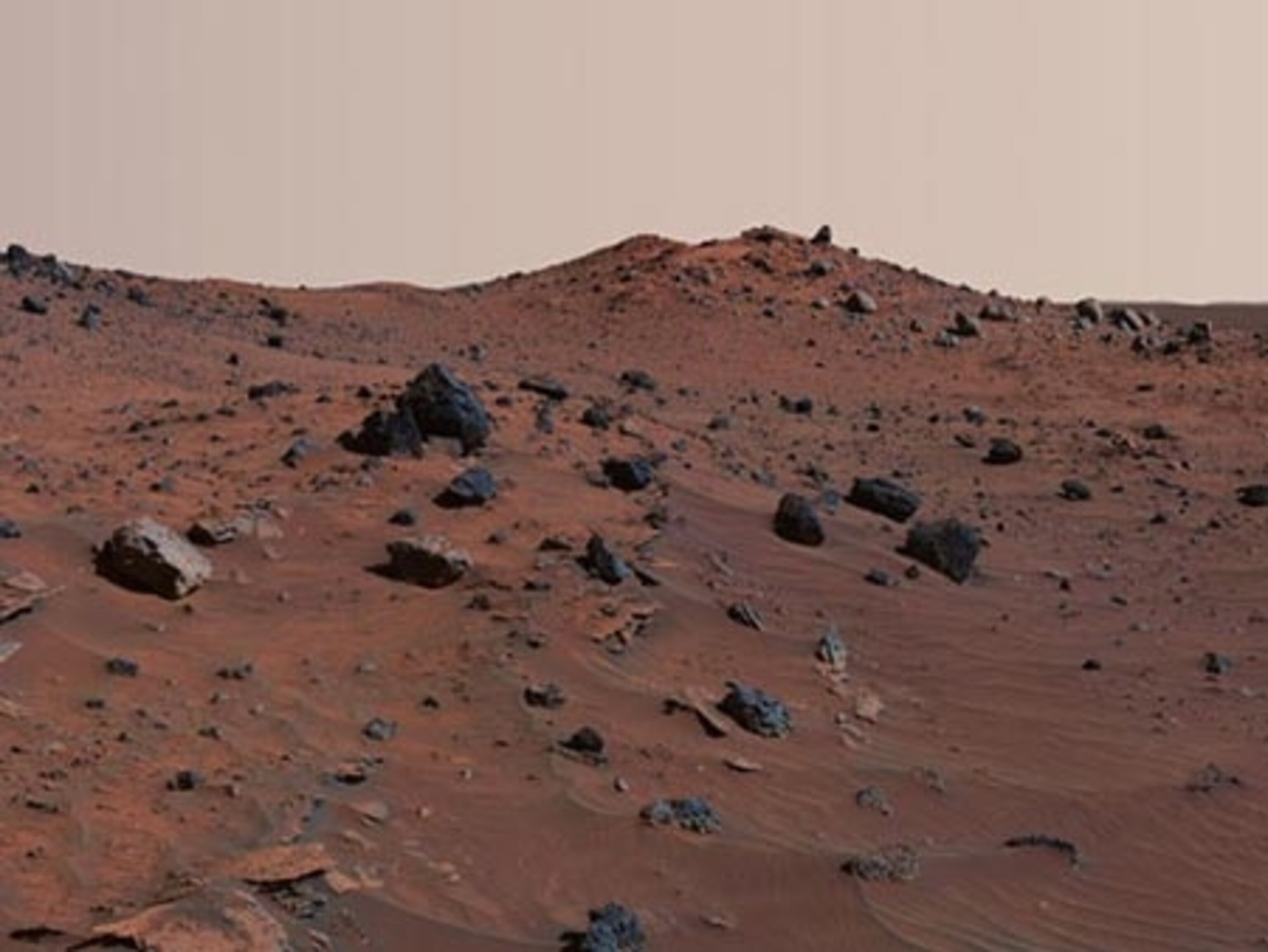
The primary driver of modern Martian geology is its atmosphere, which is mostly made of carbon dioxide, nitrogen, and argon. By Earth standards, the air is preposterously thin; air pressure atop Mount Everest is about 50 times higher than it is at the Martian surface. Despite the thin air, Martian breezes can gust up to 60 miles an hour, kicking up dust that fuels huge dust storms and massive fields of alien sand dunes.
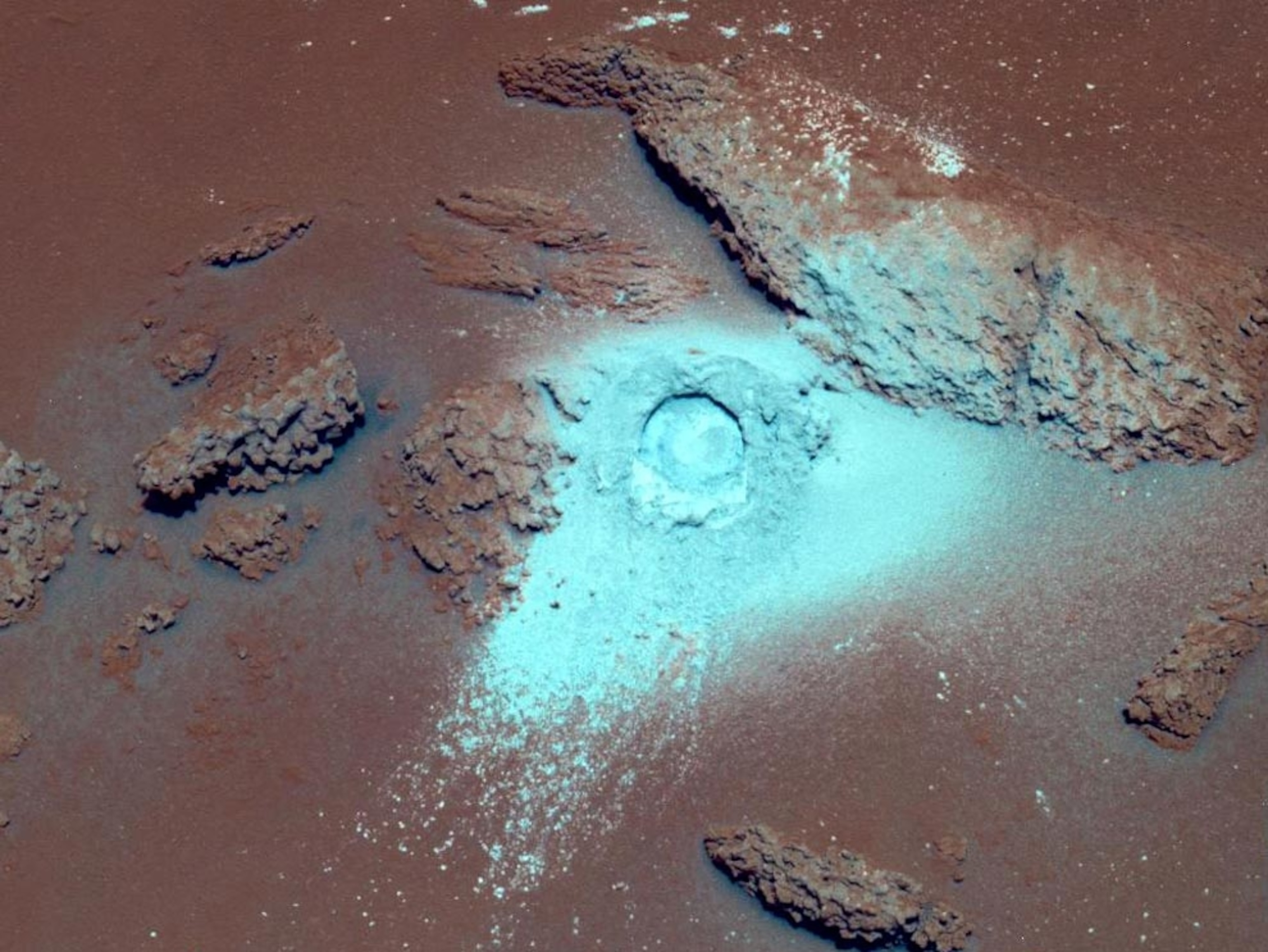
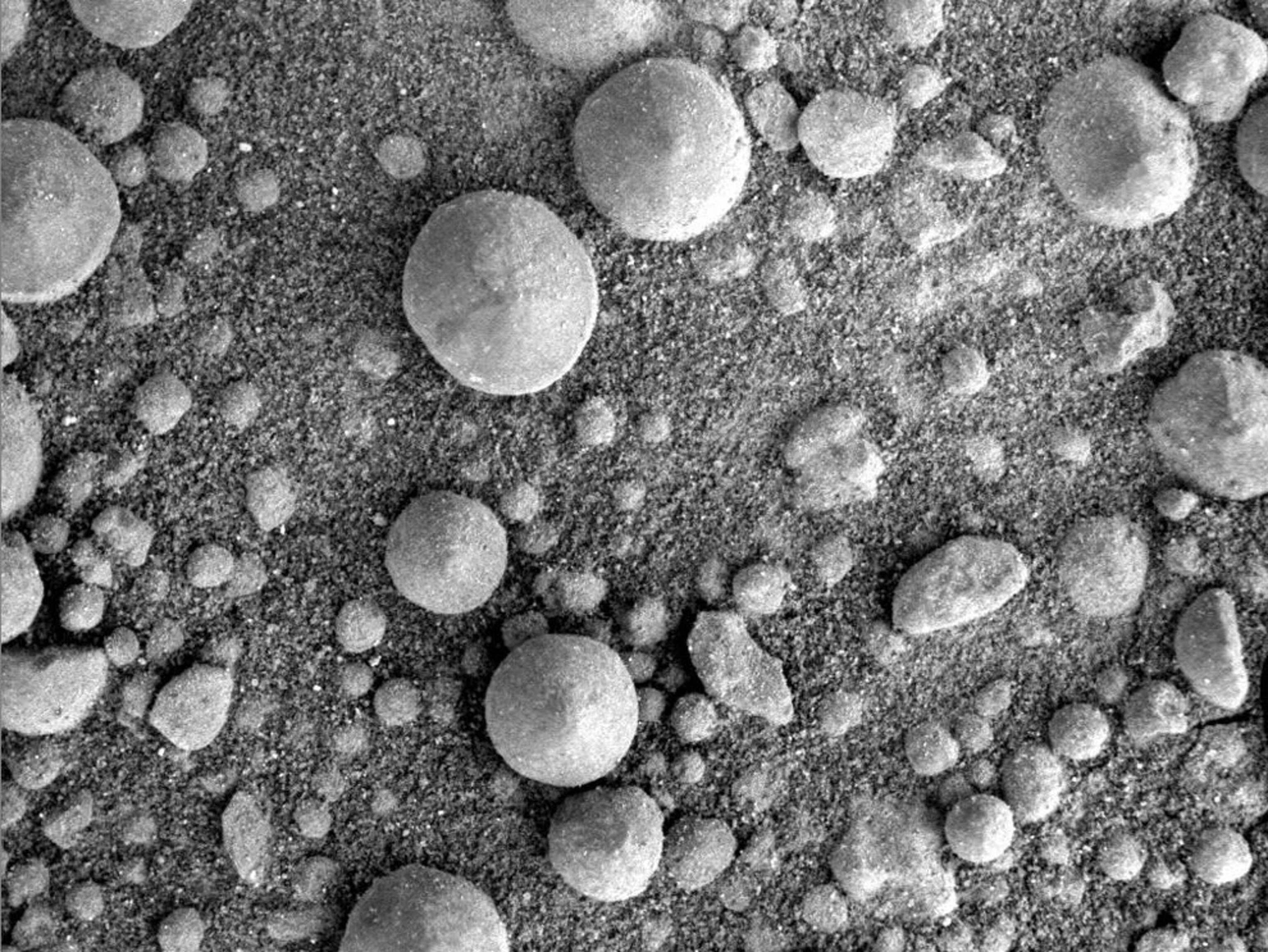
Once upon a time, though, wind and water flowed across the red planet. Robotic rovers have found clear evidence that billions of years ago, lakes and rivers of liquid water coursed across the red planet’s surface. This means that at some point in the distant past, Mars’s atmosphere was sufficiently dense and retained enough heat for water to remain liquid on the red planet’s surface. Not so today: Though water ice abounds under the Martian surface and in its polar ice caps, there are no large bodies of liquid water on the surface there today.
Mars also lacks an active plate tectonic system, the geologic engine that drives our active Earth, and is also missing a planetary magnetic field. The absence of this protective barrier makes it easier for the sun’s high-energy particles to strip away the red planet’s atmosphere, which may help explain why Mars’s atmosphere is now so thin. But in the ancient past—up until about 4.12 to 4.14 billion years ago—Mars seems to have had an inner dynamo powering a planet-wide magnetic field. What shut down the Martian dynamo? Scientists are still trying to figure out.
High highs and low lows
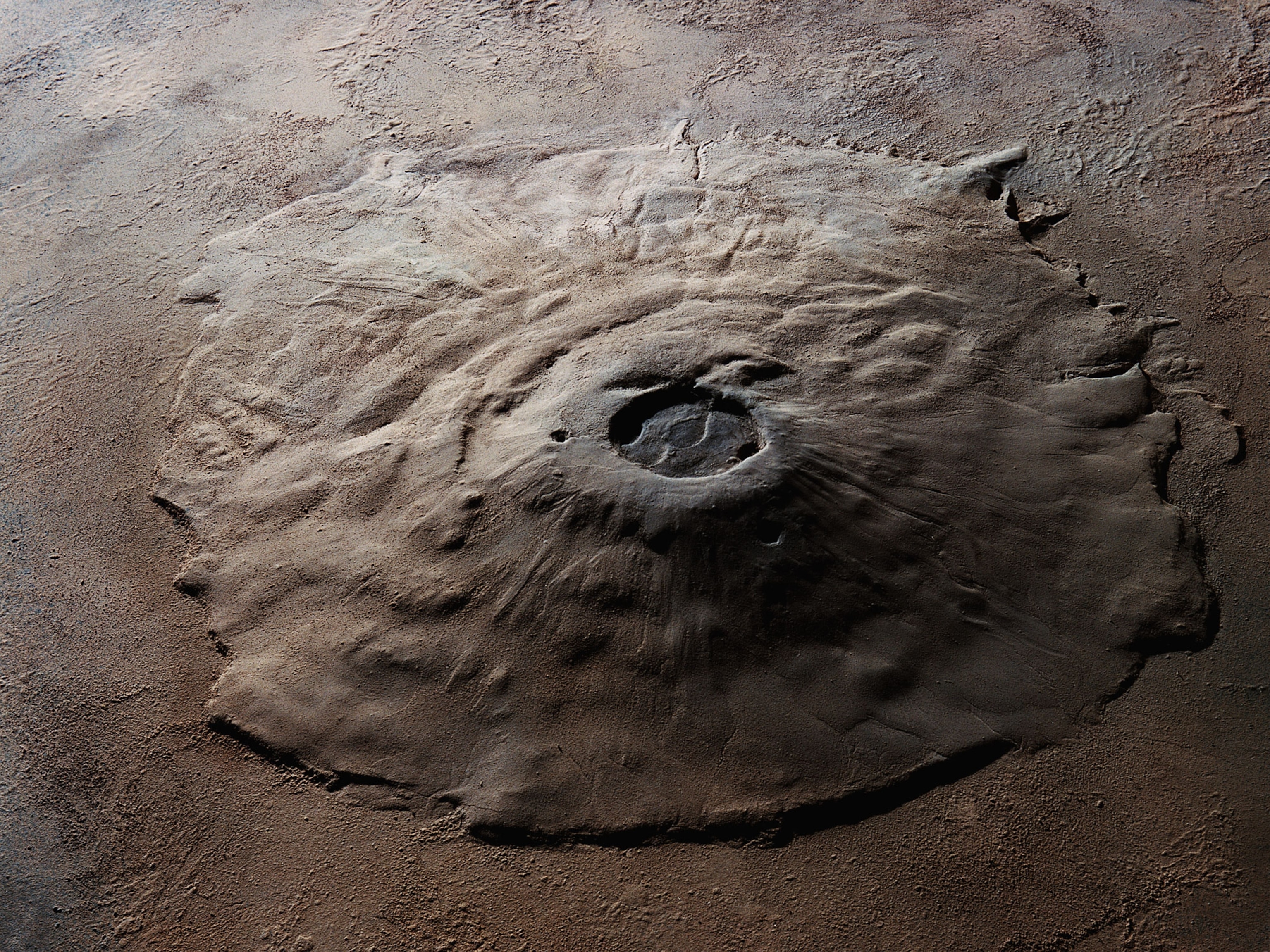
Like Earth and Venus, Mars has mountains, valleys, and volcanoes, but the red planet’s are by far the biggest and most dramatic. Olympus Mons, the solar system’s largest volcano, towers some 16 miles above the Martian surface, making it three times taller than Everest. But the base of Olympus Mons is so wide—some 374 miles across—that the volcano’s average slope is only slightly steeper than a wheelchair ramp. The peak is so massive, it curves with the surface of Mars. If you stood at the outer edge of Olympus Mons, its summit would lie beyond the horizon.
Mars has not only the highest highs, but also some of the solar system’s lowest lows. Southeast of Olympus Mons lies Valles Marineris, the red planet’s iconic canyon system. The gorges span about 2,500 miles and cut up to 4.3 miles into the red planet’s surface. The network of chasms is four times deeper—and five times longer—than Earth’s Grand Canyon, and at its widest, it’s a staggering 200 miles across. The valleys get their name from Mariner 9, which became the first spacecraft to orbit another planet when it arrived at Mars in 1971.
A tale of two hemispheres
About 4.5 billion years ago, Mars coalesced from the gaseous, dusty disk that surrounded our young sun. Over time, the red planet’s innards differentiated into a core, a mantle, and an outer crust that’s an average of 40 miles thick.


Its core is likely made of iron and nickel, like Earth’s, but probably contains more sulfur than ours. The best available estimates suggest that the core is about 2,120 miles across, give or take 370 miles—but we don’t know the specifics. NASA’s InSight lander aims to unravel the mysteries of Mars’s interior by tracking how seismic waves move through the red planet.
Mars’s northern and southern hemispheres are wildly different from one another, to a degree unlike any other planet in the solar system. The planet’s northern hemisphere consists mostly of low-lying plains, and the crust there can be just 19 miles thick. The highlands of the southern hemisphere, however, are studded with many extinct volcanoes, and the crust there can get up to 62 miles thick.
What happened? It’s possible that patterns of internal magma flow caused the difference, but some scientists think it's the result of Mars suffering one or several major impacts. One recent model suggests Mars got its two faces because an object the size of Earth’s moon slammed into Mars near its south pole.
Both hemispheres do have one thing in common: They’re covered in the planet’s trademark dust, which gets its many shades of orange, red, and brown from iron rust.
Cosmic companions
At some point in the distant past, the red planet gained its two small and irregularly shaped moons, Phobos and Deimos. The two lumpy worlds, discovered in 1877, are named for the sons and chariot drivers of the god Mars in Roman mythology. How the moons formed remains unsolved. One possibility is that they formed in the asteroid belt and were captured by Mars’s gravity. But recent models instead suggest that they could have formed from the debris flung up from Mars after a huge impact long ago.
Deimos, the smaller of the two moons, orbits Mars every 30 hours and is less than 10 miles across. Its larger sibling Phobos bears many scars, including craters and deep grooves running across its surface. Scientists have long debated what caused the grooves on Phobos. Are they tracks left behind by boulders rolling across the surface after an ancient impact, or signs that Mars’s gravity is pulling the moon apart?
Either way, the moon’s future will be considerably less groovy. Each century, Phobos gets about six feet closer to Mars; in 50 million years or so, the moon is projected either to crash into the red planet’s surface or break into smithereens.
Missions to Mars
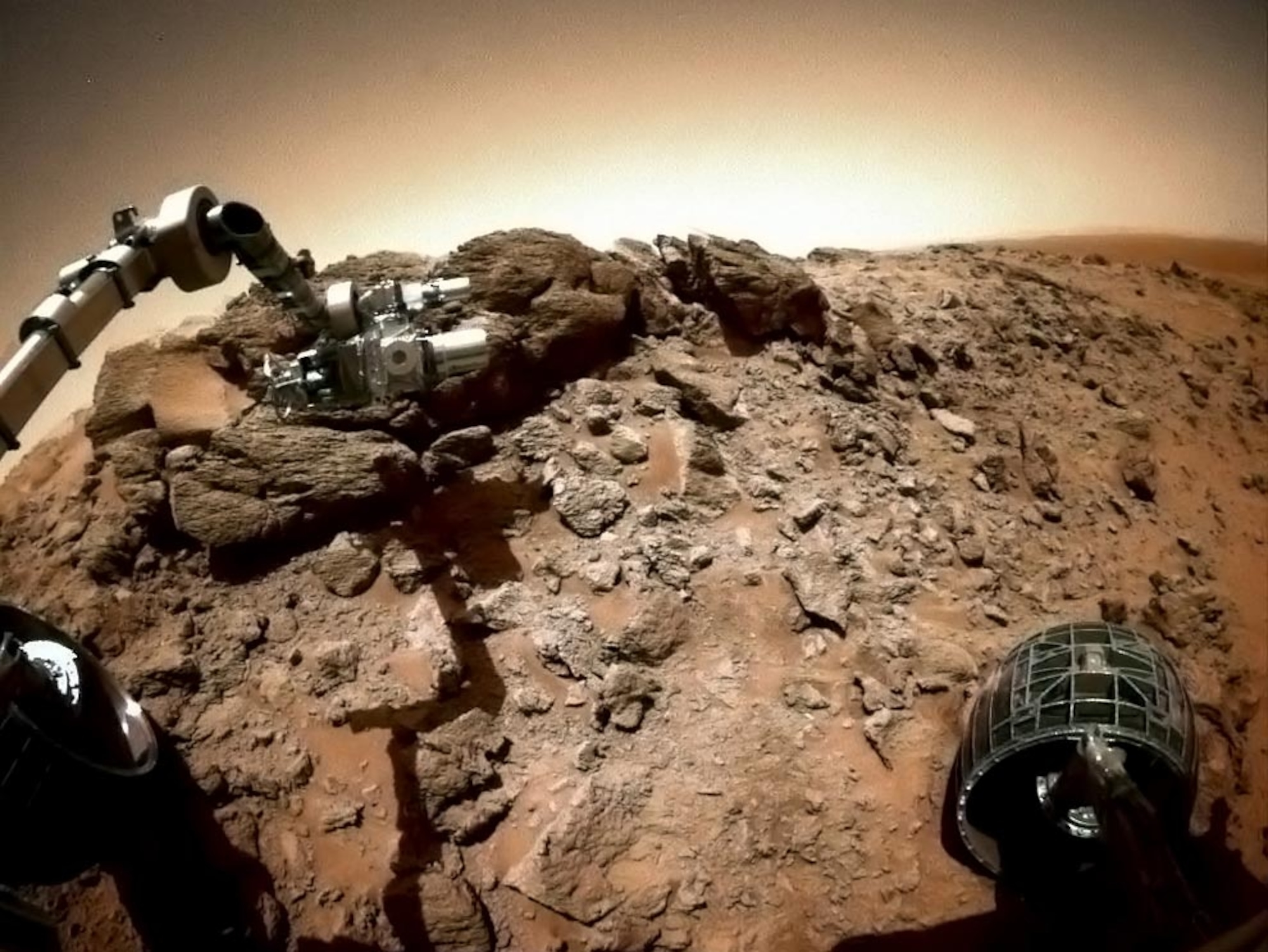
Since the 1960s, humans have robotically explored Mars more than any other planet beyond Earth. Currently, eight missions from the U.S., European Union, Russia, and India are actively orbiting Mars or roving across its surface. But getting safely to the red planet is no small feat. Of the 45 Mars missions launched since 1960, 26 have had some component fail to leave Earth, fall silent en route, miss orbit around Mars, burn up in the atmosphere, crash on the surface, or die prematurely.
More missions are on the horizon, including some designed to help search for Martian life. NASA is building its Mars 2020 rover to cache promising samples of Martian rock that a future mission would return to Earth. In 2020, the European Space Agency and Roscosmos plan to launch a rover named for chemist Rosalind Franklin, whose work was crucial to deciphering the structure of DNA. The rover will drill into Martian soil to hunt for signs of past and present life. Other countries are joining the fray, making space exploration more global in the process. In July 2020, the United Arab Emirates is slated to launch its Hope orbiter, which will study the Martian atmosphere.
Perhaps humans will one day join robots on the red planet. NASA has stated its goal to send humans back to the moon as a stepping-stone to Mars. Elon Musk, founder and CEO of SpaceX, is building a massive vehicle called Starship in part to send humans to Mars. Will humans eventually build a scientific base on the Martian surface, like those that dot Antarctica? How will human activity affect the red planet or our searches for life there?
Time will tell. But no matter what, Mars will continue to occupy the human imagination, a glimmering red beacon in our skies and stories.
Canup and Salmon 2018 - Impact origin for Phobos and Deimos
InSight SEIS Instrument - Mysteries of Mars’s interior
James Head - Geology of Mars
Leone et al. 2014 - Southern polar giant impact hypothesis
NASA - The fact and fiction of Martian dust storms
NASA Jet Propulsion Laboratory - Mariner 9
NASA Mars Exploration - Facts about Mars
NASA Mars Exploration - Historical log of Mars missions
NASA Mars Exploration Program - Valles Marineris
NASA Science Solar System Exploration - Deimos
NASA Science Solar System Exploration - Mars
NASA Science Solar System Exploration - Phobos
Ryan Anderson - Height of Olympus Mons
Vervelidou et al. 2017 - Age of Mars dynamo shutdown
You May Also Like



Go Further
Animals
- How can we protect grizzlies from their biggest threat—trains?How can we protect grizzlies from their biggest threat—trains?
- This ‘saber-toothed’ salmon wasn’t quite what we thoughtThis ‘saber-toothed’ salmon wasn’t quite what we thought
- Why this rhino-zebra friendship makes perfect senseWhy this rhino-zebra friendship makes perfect sense
- When did bioluminescence evolve? It’s older than we thought.When did bioluminescence evolve? It’s older than we thought.
- Soy, skim … spider. Are any of these technically milk?Soy, skim … spider. Are any of these technically milk?
Environment
- Are the Great Lakes the key to solving America’s emissions conundrum?Are the Great Lakes the key to solving America’s emissions conundrum?
- The world’s historic sites face climate change. Can Petra lead the way?The world’s historic sites face climate change. Can Petra lead the way?
- This pristine piece of the Amazon shows nature’s resilienceThis pristine piece of the Amazon shows nature’s resilience
- Listen to 30 years of climate change transformed into haunting musicListen to 30 years of climate change transformed into haunting music
History & Culture
- Meet the original members of the tortured poets departmentMeet the original members of the tortured poets department
- Séances at the White House? Why these first ladies turned to the occultSéances at the White House? Why these first ladies turned to the occult
- Gambling is everywhere now. When is that a problem?Gambling is everywhere now. When is that a problem?
- Beauty is pain—at least it was in 17th-century SpainBeauty is pain—at least it was in 17th-century Spain
Science
- Here's how astronomers found one of the rarest phenomenons in spaceHere's how astronomers found one of the rarest phenomenons in space
- Not an extrovert or introvert? There’s a word for that.Not an extrovert or introvert? There’s a word for that.
- NASA has a plan to clean up space junk—but is going green enough?NASA has a plan to clean up space junk—but is going green enough?
- Soy, skim … spider. Are any of these technically milk?Soy, skim … spider. Are any of these technically milk?
Travel
- This tomb diver was among the first to swim beneath a pyraamidThis tomb diver was among the first to swim beneath a pyraamid
- Dina Macki on Omani cuisine and Zanzibari flavoursDina Macki on Omani cuisine and Zanzibari flavours
- How to see Mexico's Baja California beyond the beachesHow to see Mexico's Baja California beyond the beaches
- Could Mexico's Chepe Express be the ultimate slow rail adventure?Could Mexico's Chepe Express be the ultimate slow rail adventure?
