



Dinosaurs, birds, and rodents. Crumbling landmasses and inland seas. Sea monsters, sharks, and blood-red plankton. Forests of ferns, cycads, and conifers. Warm, moist, tropical breezes. This was the Jurassic, which took place 199 to 145 million years ago.
A Shifting Climate and Developing Oceans
At the start of the period, the breakup of the supercontinent Pangaea continued and accelerated. Laurasia, the northern half, broke up into North America and Eurasia. Gondwana, the southern half, began to break up by the mid-Jurassic. The eastern portion—Antarctica, Madagascar, India, and Australia—split from the western half, Africa and South America. New oceans flooded the spaces in between. Mountains rose on the seafloor, pushing sea levels higher and onto the continents.
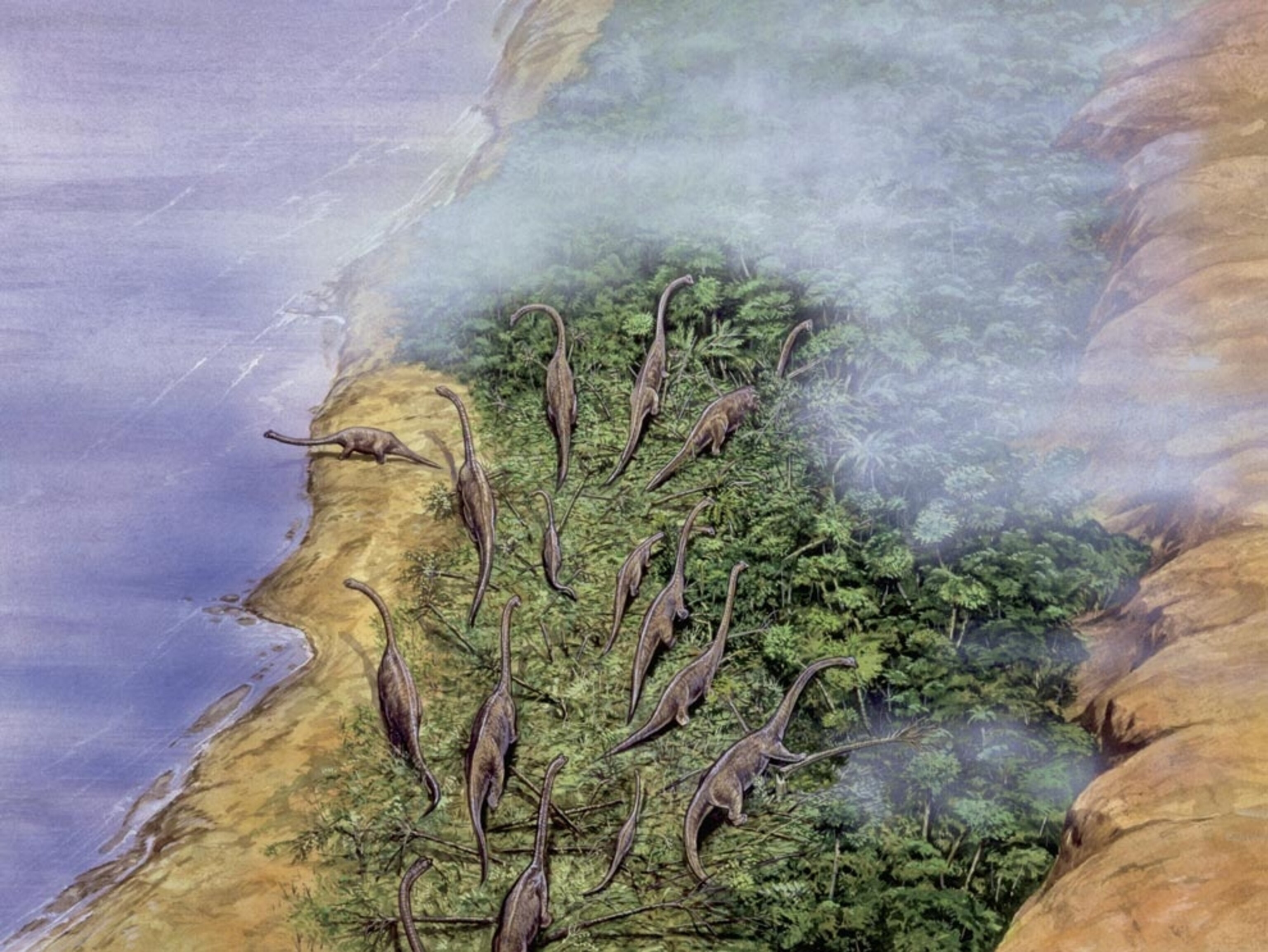
All this water gave the previously hot and dry climate a humid and drippy subtropical feel. Dry deserts slowly took on a greener hue. Palm tree-like cycads were abundant, as were conifers such as araucaria and pines. Ginkgoes carpeted the mid- to high northern latitudes, and podocarps, a type of conifer, were particularly successful south of the Equator. Tree ferns were also present.
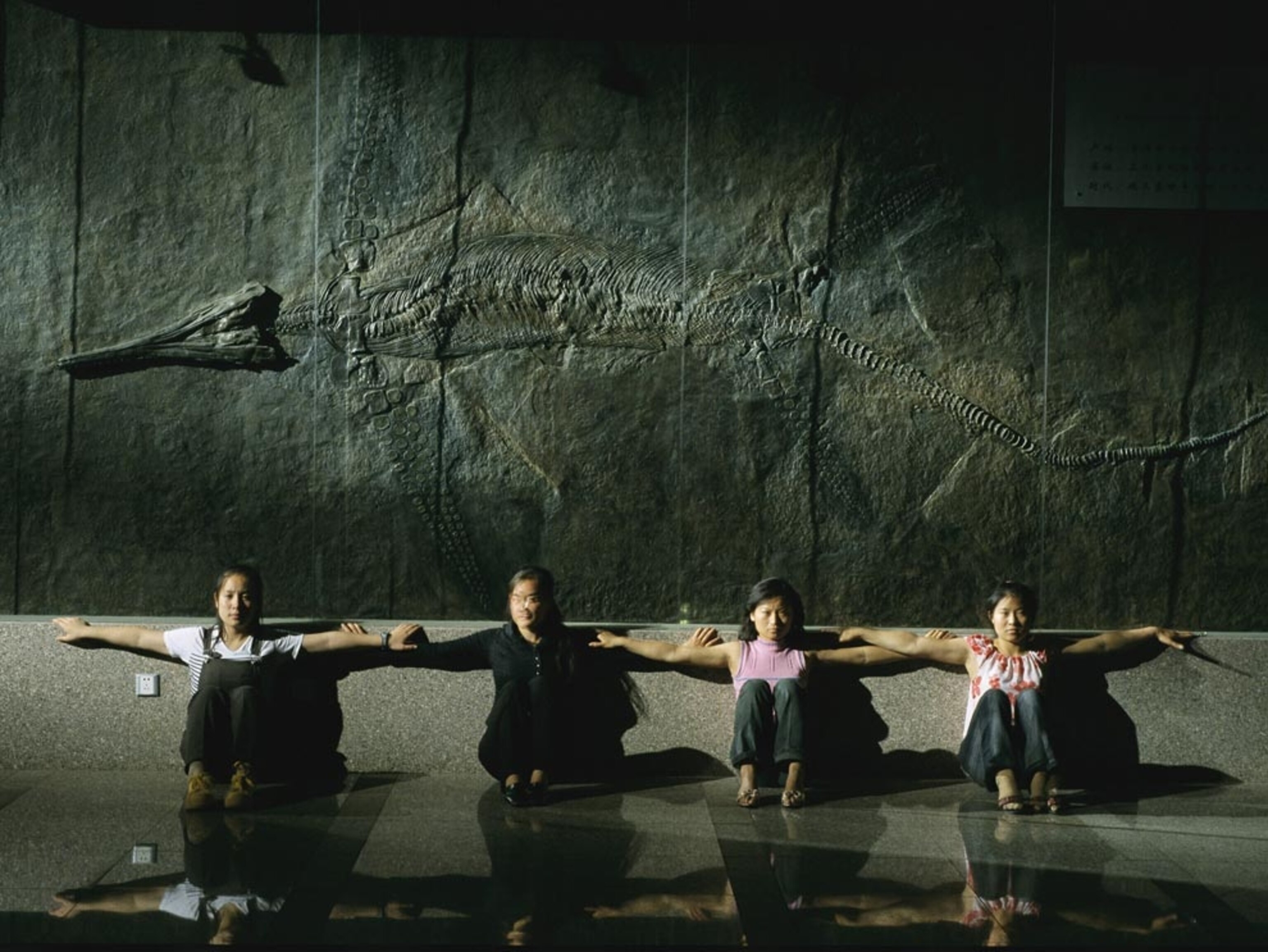
The oceans, especially the newly formed shallow interior seas, teemed with diverse and abundant life. At the top of the food chain were the long-necked and paddle-finned plesiosaurs, giant marine crocodiles, sharks, and rays. Fishlike ichthyosaurs, squidlike cephalopods, and coil-shelled ammonites were abundant. Coral reefs grew in the warm waters, and sponges, snails, and mollusks flourished. Microscopic, free-floating plankton proliferated and may have turned parts of the ocean red.
Huge Dinosaurs
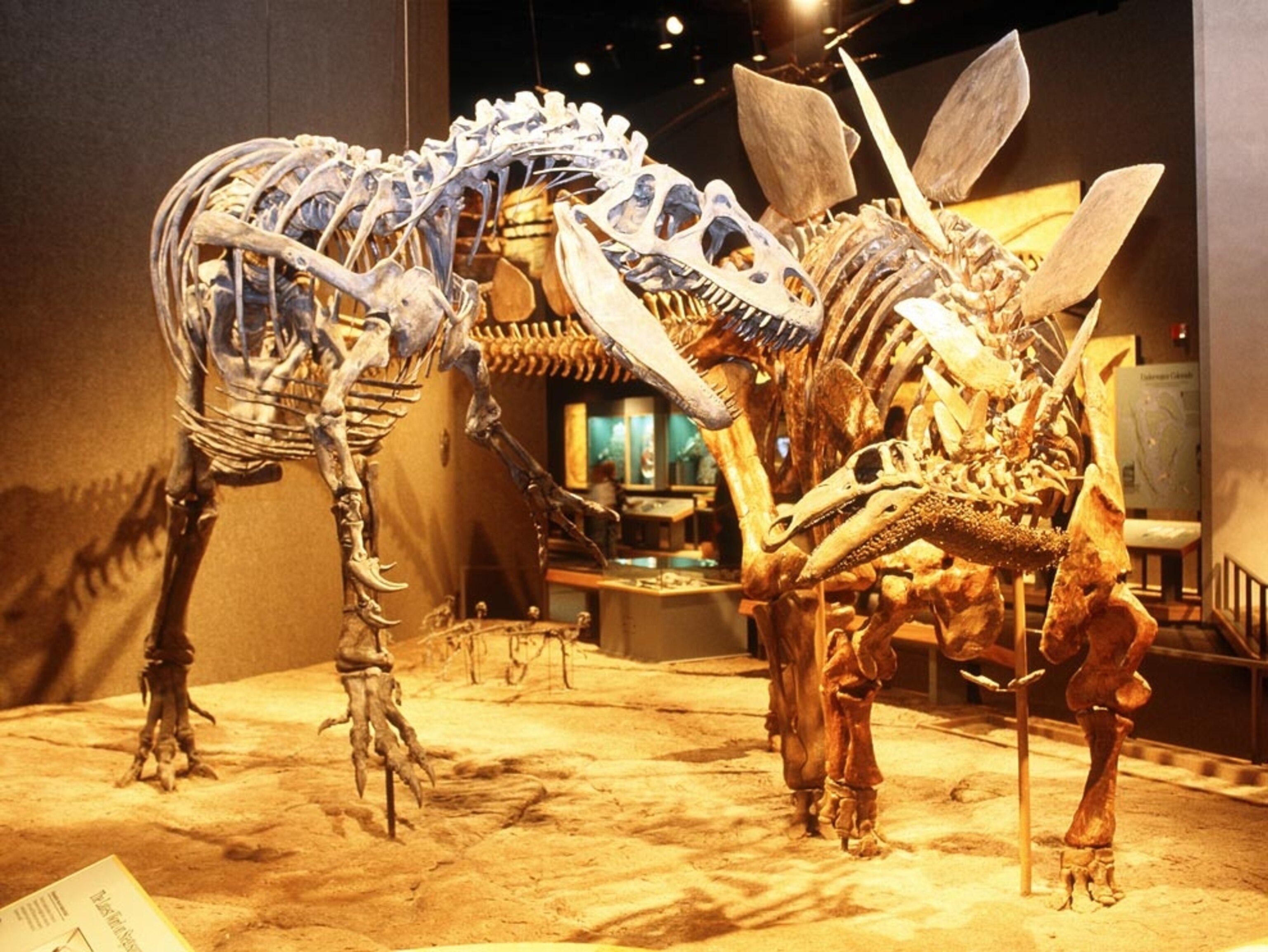
On land, dinosaurs were making their mark in a big way—literally. The plant-eating sauropod Brachiosaurus stood up to 52 feet (16 meters) tall, stretched some 85 feet (26 meters) long, and weighed more than 80 tons. Diplodocus, another sauropod, was 90 feet (27 meters) long. These dinosaurs' sheer size may have deterred attack from Allosaurus, a bulky, meat-eating dinosaur that walked on two powerful legs. But Allosaurus and other fleet-footed carnivores, such as the coelurosaurs, must have had occasional success. Other prey included the heavily armored stegosaurs.
The earliest known bird, Archaeopteryx, took to the skies in the late Jurassic, most likely evolved from an early coelurosaurian dinosaur. Archaeopteryx had to compete for airspace with pterosaurs, flying reptiles that had been buzzing the skies since the late Triassic. Meanwhile, insects such as leafhoppers and beetles were abundant, and many of Earth's earliest mammals scurried around dinosaur feet—ignorant that their kind would come to dominate Earth once the dinosaurs were wiped out at the end of the Cretaceous.
You May Also Like



Go Further
Animals
- How can we protect grizzlies from their biggest threat—trains?How can we protect grizzlies from their biggest threat—trains?
- This ‘saber-toothed’ salmon wasn’t quite what we thoughtThis ‘saber-toothed’ salmon wasn’t quite what we thought
- Why this rhino-zebra friendship makes perfect senseWhy this rhino-zebra friendship makes perfect sense
- When did bioluminescence evolve? It’s older than we thought.When did bioluminescence evolve? It’s older than we thought.
- Soy, skim … spider. Are any of these technically milk?Soy, skim … spider. Are any of these technically milk?
Environment
- Are the Great Lakes the key to solving America’s emissions conundrum?Are the Great Lakes the key to solving America’s emissions conundrum?
- The world’s historic sites face climate change. Can Petra lead the way?The world’s historic sites face climate change. Can Petra lead the way?
- This pristine piece of the Amazon shows nature’s resilienceThis pristine piece of the Amazon shows nature’s resilience
- Listen to 30 years of climate change transformed into haunting musicListen to 30 years of climate change transformed into haunting music
History & Culture
- Meet the original members of the tortured poets departmentMeet the original members of the tortured poets department
- Séances at the White House? Why these first ladies turned to the occultSéances at the White House? Why these first ladies turned to the occult
- Gambling is everywhere now. When is that a problem?Gambling is everywhere now. When is that a problem?
- Beauty is pain—at least it was in 17th-century SpainBeauty is pain—at least it was in 17th-century Spain
Science
- Here's how astronomers found one of the rarest phenomenons in spaceHere's how astronomers found one of the rarest phenomenons in space
- Not an extrovert or introvert? There’s a word for that.Not an extrovert or introvert? There’s a word for that.
- NASA has a plan to clean up space junk—but is going green enough?NASA has a plan to clean up space junk—but is going green enough?
- Soy, skim … spider. Are any of these technically milk?Soy, skim … spider. Are any of these technically milk?
Travel
- Could Mexico's Chepe Express be the ultimate slow rail adventure?Could Mexico's Chepe Express be the ultimate slow rail adventure?
- What it's like to hike the Camino del Mayab in MexicoWhat it's like to hike the Camino del Mayab in Mexico
