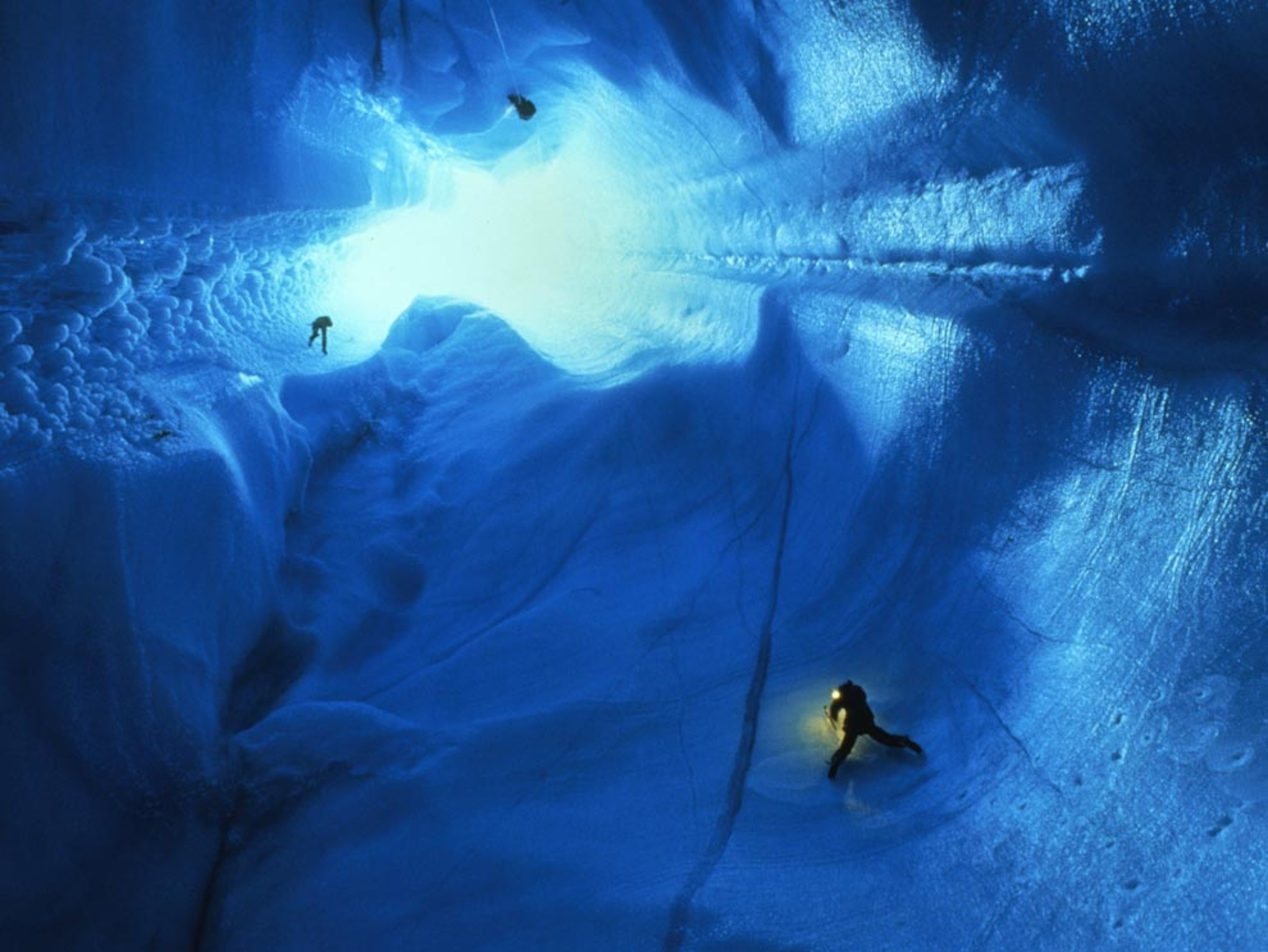



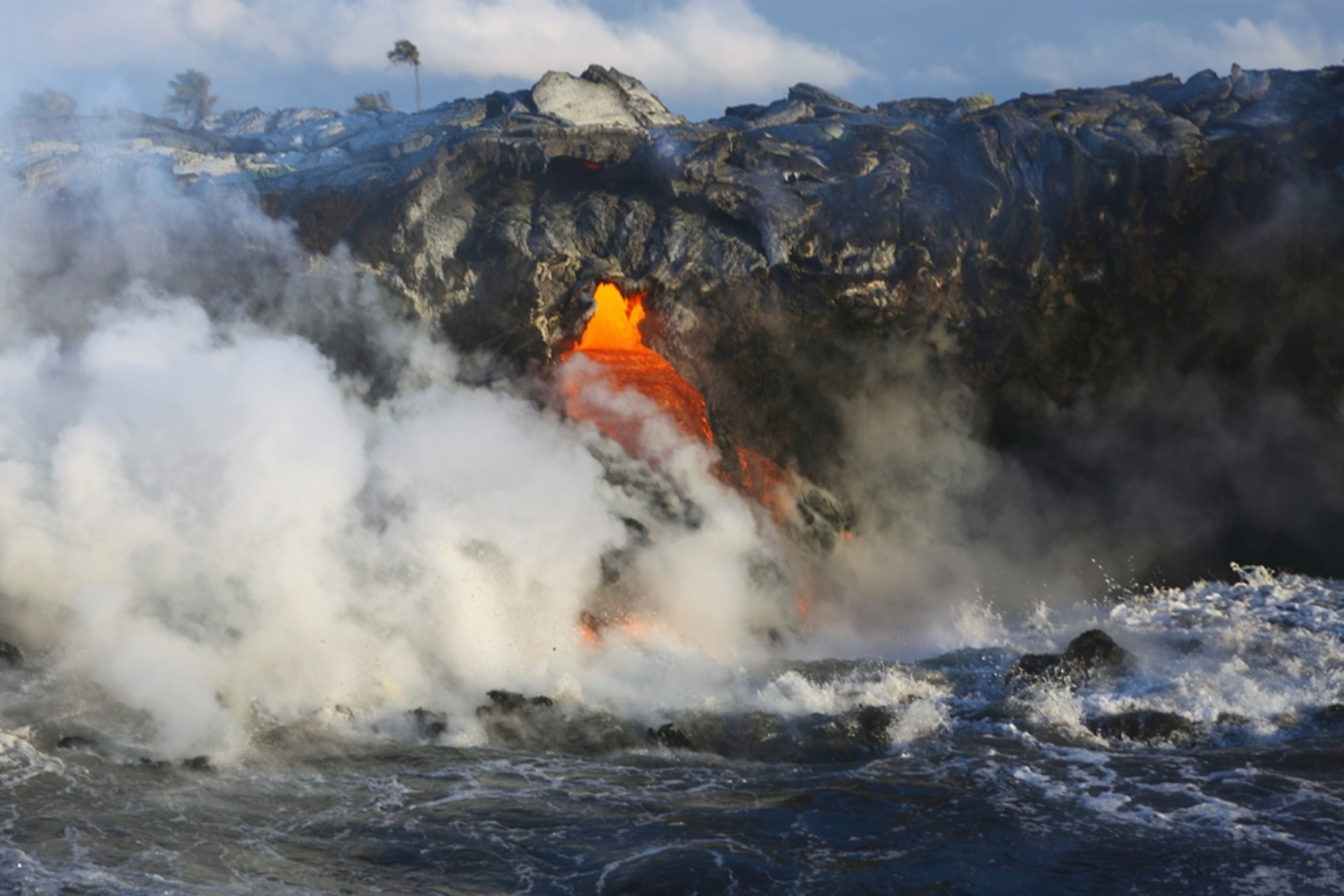



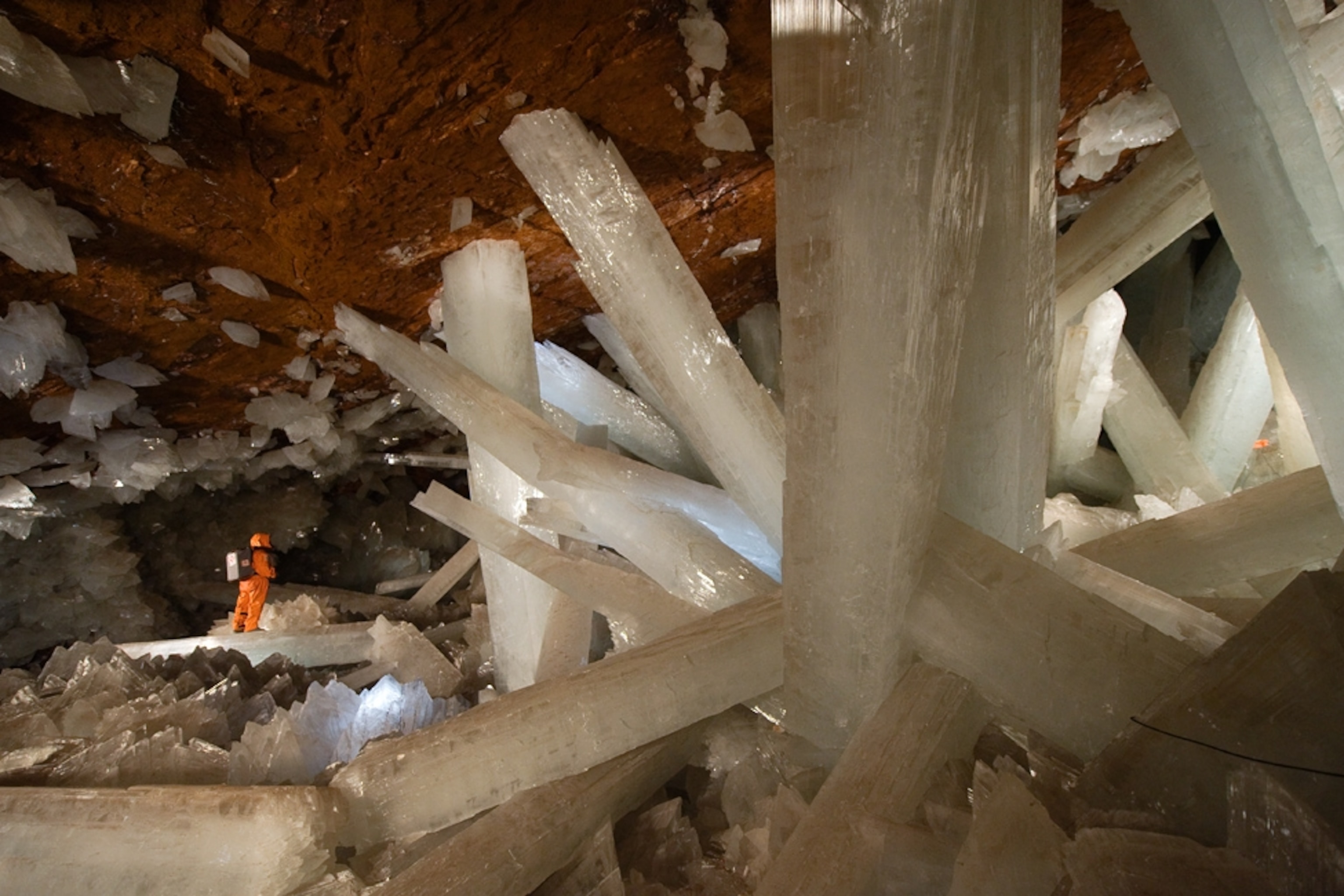

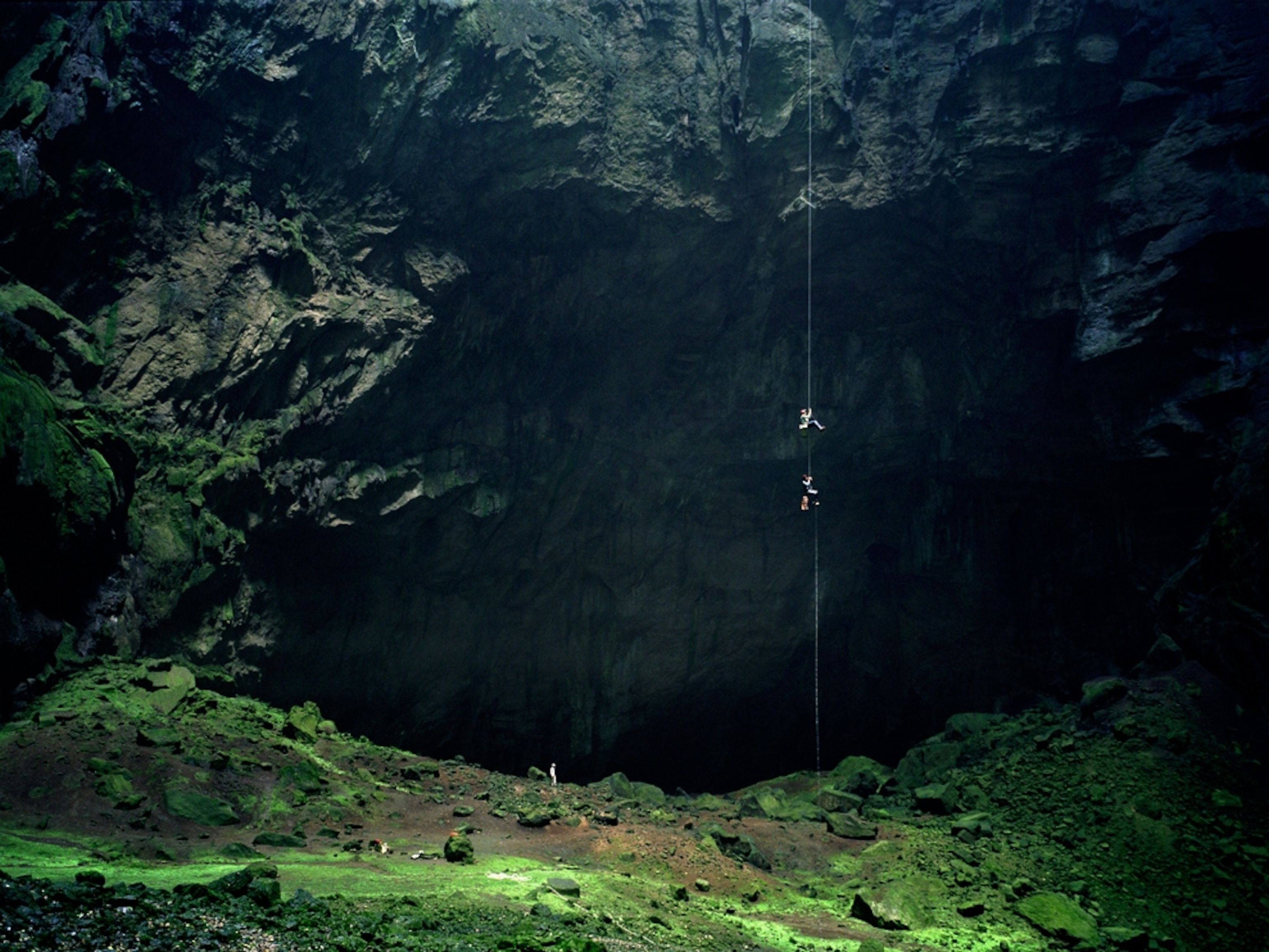


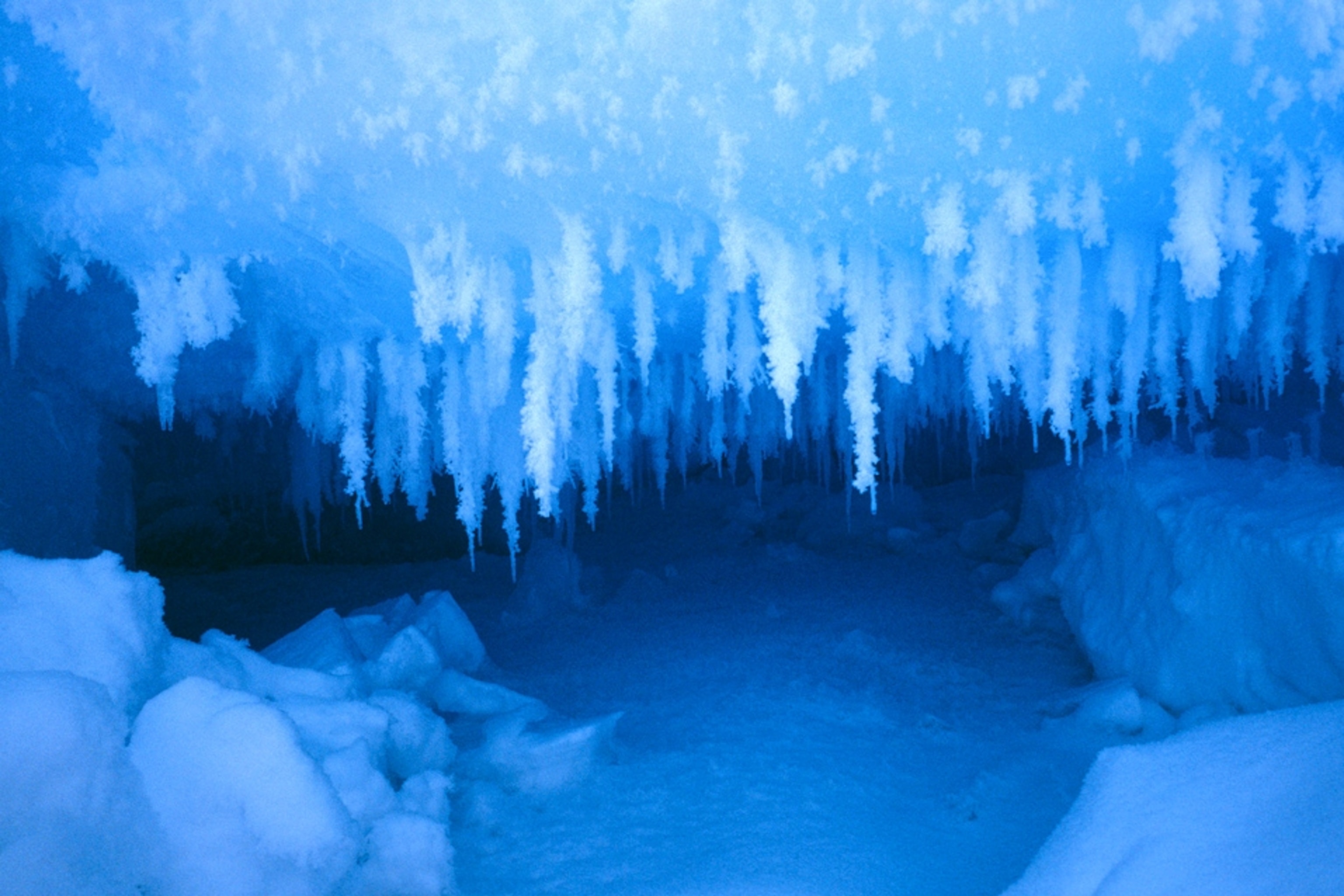
A veil of darkness cloaks the natural beauty of caves. Some are found in cliffs at the edge of the coastline, chipped away by the relentless pounding of waves. Others form where a lava tube's outer surface cools and hardens and the inside of the molten rock drains away. Caves even form in glaciers where meltwater carves tunnels at the beginning of its journey to the sea.
Formation Process
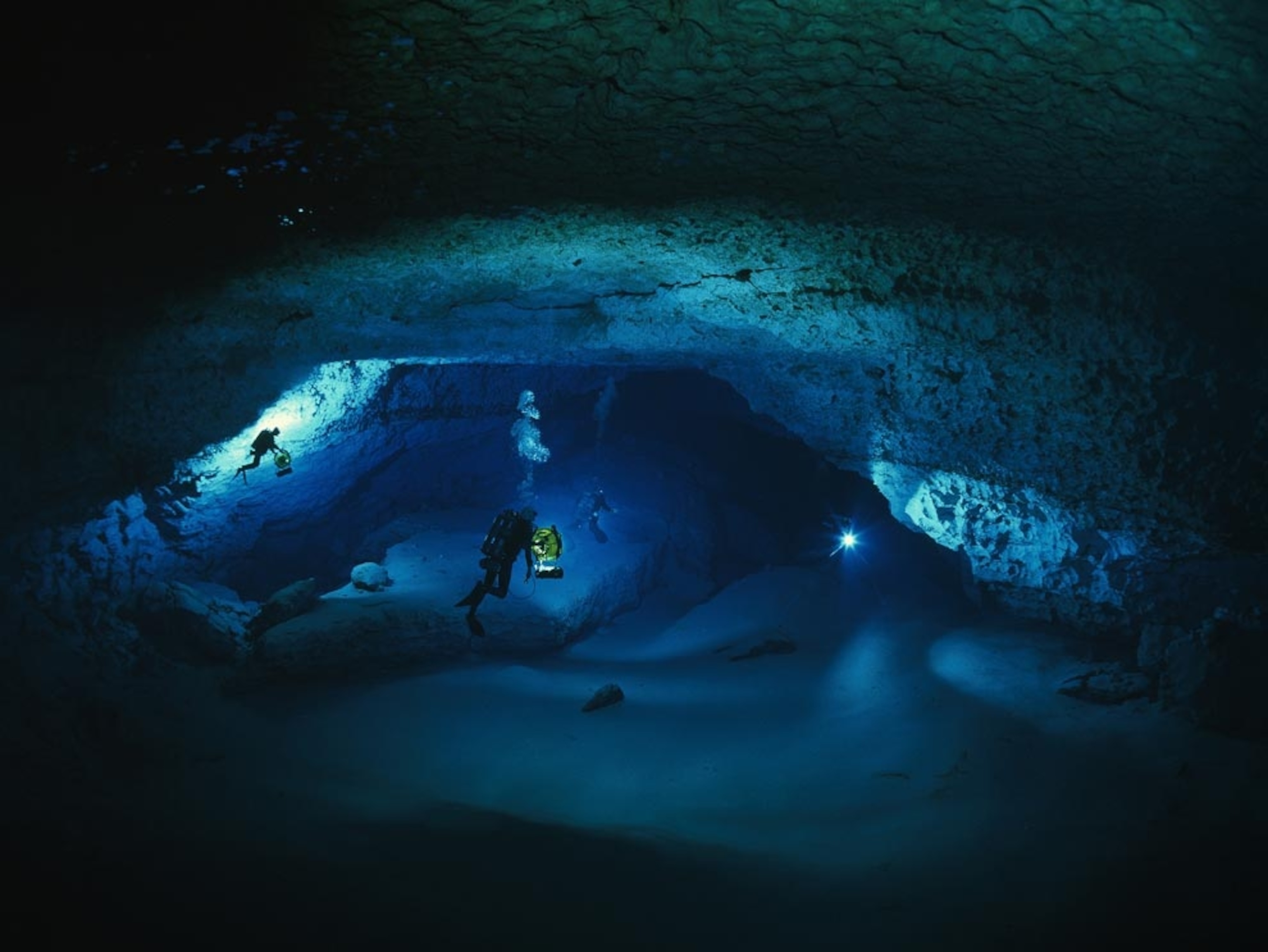
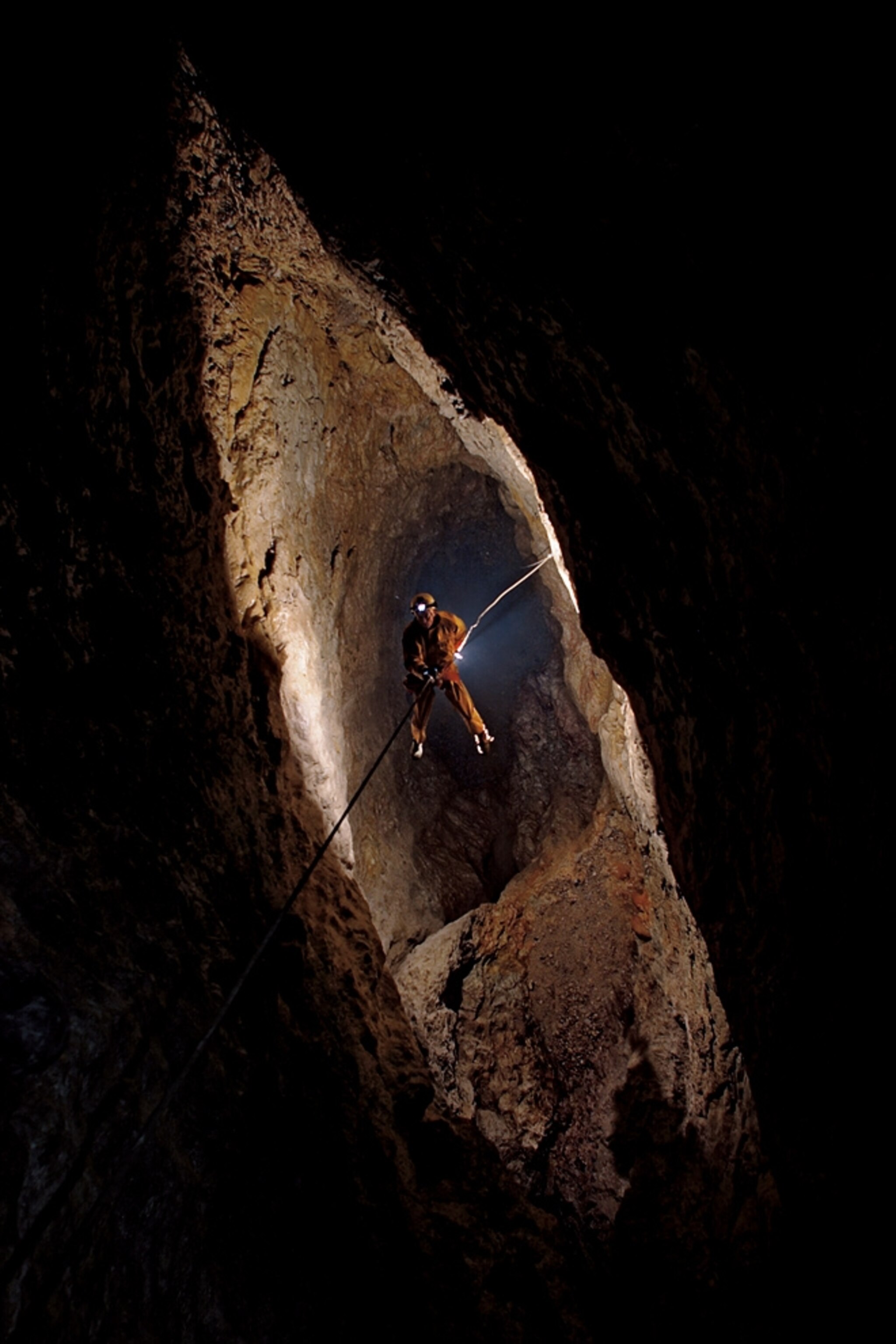
But most caves form in karst, a type of landscape made of limestone, dolomite, and gypsum rocks that slowly dissolve in the presence of water with a slightly acidic tinge. Rain mixes with carbon dioxide in the atmosphere as it falls to the ground and then picks up more of the gas as it seeps into the soil. The combination is a weak acidic solution that dissolves calcite, the main mineral of karst rocks.
The acidic water percolates down into the Earth through cracks and fractures and creates a network of passages like an underground plumbing system. The passages widen as more water seeps down, allowing even more water to flow through them. Eventually, some of the passages become large enough to earn the distinction of "cave". Most of these solutional caves require more than 100,000 years to widen large enough to hold a human.
The water courses down through the Earth until it reaches the zone where the rocks are completely saturated with water. Here, masses of water continually slosh to and fro, explaining why many caverns lay nearly horizontal.
Fanciful Features
Hidden in the darkness of caves, rock formations called speleothems droop from the ceilings like icicles, emerge from the floor like mushrooms, and cover the sides like sheets of a waterfall. Speleothems form as the carbon dioxide in the acidic water escapes in the airiness of the cave and the dissolved calcite hardens once again.
The icicle-shaped formations are called stalactites and form as water drips from the cave roof. Stalagmites grow up from the floor, usually from the water that drips off the end of stalactites. Columns form where stalactites and stalagmites join. Sheets of calcite growths on cave walls and floor are called flowstones. Other stalactites take the form of draperies and soda straws. Twisty shapes called helictites warp in all directions from the ceiling, walls, and floor.
Reader-Submitted Photographs of Caves


Related Topics
You May Also Like



Go Further
Animals
- This ‘saber-toothed’ salmon wasn’t quite what we thoughtThis ‘saber-toothed’ salmon wasn’t quite what we thought
- Why this rhino-zebra friendship makes perfect senseWhy this rhino-zebra friendship makes perfect sense
- When did bioluminescence evolve? It’s older than we thought.When did bioluminescence evolve? It’s older than we thought.
- Soy, skim … spider. Are any of these technically milk?Soy, skim … spider. Are any of these technically milk?
- This pristine piece of the Amazon shows nature’s resilienceThis pristine piece of the Amazon shows nature’s resilience
Environment
- Are the Great Lakes the key to solving America’s emissions conundrum?Are the Great Lakes the key to solving America’s emissions conundrum?
- The world’s historic sites face climate change. Can Petra lead the way?The world’s historic sites face climate change. Can Petra lead the way?
- This pristine piece of the Amazon shows nature’s resilienceThis pristine piece of the Amazon shows nature’s resilience
- Listen to 30 years of climate change transformed into haunting musicListen to 30 years of climate change transformed into haunting music
History & Culture
- Meet the original members of the tortured poets departmentMeet the original members of the tortured poets department
- Séances at the White House? Why these first ladies turned to the occultSéances at the White House? Why these first ladies turned to the occult
- Gambling is everywhere now. When is that a problem?Gambling is everywhere now. When is that a problem?
- Beauty is pain—at least it was in 17th-century SpainBeauty is pain—at least it was in 17th-century Spain
Science
- Here's how astronomers found one of the rarest phenomenons in spaceHere's how astronomers found one of the rarest phenomenons in space
- Not an extrovert or introvert? There’s a word for that.Not an extrovert or introvert? There’s a word for that.
- NASA has a plan to clean up space junk—but is going green enough?NASA has a plan to clean up space junk—but is going green enough?
- Soy, skim … spider. Are any of these technically milk?Soy, skim … spider. Are any of these technically milk?
Travel
- Could Mexico's Chepe Express be the ultimate slow rail adventure?Could Mexico's Chepe Express be the ultimate slow rail adventure?
- What it's like to hike the Camino del Mayab in MexicoWhat it's like to hike the Camino del Mayab in Mexico
