
From historical omens of doom to Hollywood blockbusters about saving the world, comets and asteroids loom large in fiction and folklore. And there’s a good reason: One of the chunky rocks or balls of ice could eventually slam into Earth and change the planet irreversibly. Such an impact 66 million years ago is widely believed to have killed off the dinosaurs.
On Saturday March 25, an asteroid will whiz past Earth in what NASA describes as a once-in-a-decade event for its size. Asteroid 2023 DZ3 measures around 140 to 310 feet long, according to the space agency—that's about four to eight bus lengths. EarthSky reports that the asteroid will pass between Earth and the moon, meaning it may be visible from a telescope as early as Friday night and will appear as a "slow-moving star."
This asteroid is expected to pass by Earth safely. But what are asteroids to begin with—and what's the difference between them and comets?
Both are remnants of a process that began some 4.6 billion years ago after a giant cloud of gas and dust collapsed and condensed to create the sun. The leftover debris orbiting the sun coalesced into planets, moons, and other objects such as steroids and comets. Here’s what you need to know about how they differ, where they come from, and whether they pose a serious threat to Earth.
What are asteroids and the asteroid belt?
Asteroids are essentially chunks of rock that measure in size from a few feet to hundreds of miles in diameter. NASA has identified more than a million asteroids, and more than 150 of them have their own moons. In 2022, astronomers published evidence that the asteroid Elektra has as many as three chunks of rock orbiting it—making it the first known quadruple asteroid.
For many years, astronomers considered Ceres to be the largest asteroid at about 590 miles wide. In 2006, however, the International Astronomical Union reclassified Ceres as a dwarf planet—making Vesta the largest asteroid at 329 miles wide. Yet this remains a point of contention among some astronomers, and the U.S. Geological Survey’s Gazetteer of Planetary Nomenclature defines Ceres as both an asteroid and a dwarf planet.
Small asteroids are called meteoroids. If they enter Earth’s atmosphere, they are called meteors, or shooting stars—and if a meteor hits the ground, it becomes a meteorite.
Today, most asteroids in our solar system orbit the sun in a region located between Mars and Jupiter called the asteroid belt. Many astronomers believe the belt is filled with primordial material that never glommed into a planet because of Jupiter's gravitational pull. Others theorize that the belt might be “a cosmic refugee camp” for the remnants of planets that formed elsewhere in the solar system.
What are comets?
Comets are balls of ice and rock whose glowing tails can sometimes be seen from Earth as they streak through the night sky. Comets grow those tails whenever their orbits bring them close to the sun, causing the icy objects to heat up and expel a trail of gas and dust. The sun illuminates the tail, giving it a majestic glow.
Compared to asteroids, comets tend to have more elliptical, or oval-shaped, orbits. They also contain more chemical compounds that vaporize when heated, such as water. And when observed through a telescope, comets appear fuzzier than asteroids.


(11 spectacular night sky events to see in 2023.)

While there are perhaps trillions of comets ringing the outer fringes of the solar system, bright comets appear in Earth's visible night sky only about once per decade. These are divided into two types: short-period comets and long-period comets.
Short-period comets take less than 200 years to orbit the sun, and many of these objects come from the Kuiper Belt, a ring of icy bodies beyond Neptune’s orbit. The most famous of these is Halley's Comet, which appears every 75 to 76 years.
Most long-period comets are believed to come from the Oort Cloud, a theorized collection of objects surrounding the outer reaches of the solar system. According to NASA, it can take thousands or even millions of years for these comets to orbit the sun. The appearance of these comets in the night sky is much more difficult to predict because there’s little record of their past appearances.
(One of the largest comets ever seen is headed our way.)
Do asteroids and comets pose a threat to Earth?
Gravitational tugs, orbital collisions, and outer space jostles occasionally perturb an asteroid or comet onto a wayward path—some careening close enough to Earth to pose a risk of impact. Most of them, fortunately, are too small to cause any damage. Instead, they burn up in the atmosphere and appear to us as shooting stars.


Astronomers are constantly on the lookout for larger bodies that could be on a more catastrophic trajectory. The asteroid that’s most likely to slam into Earth in the next 300 years is called Bennu, a rock that’s about a third of a mile wide. But the chances it will hit Earth in that time are slim—only 1-in-1,750—and the most likely dates for an impact wouldn’t be until the late 2100s or early 2200s.
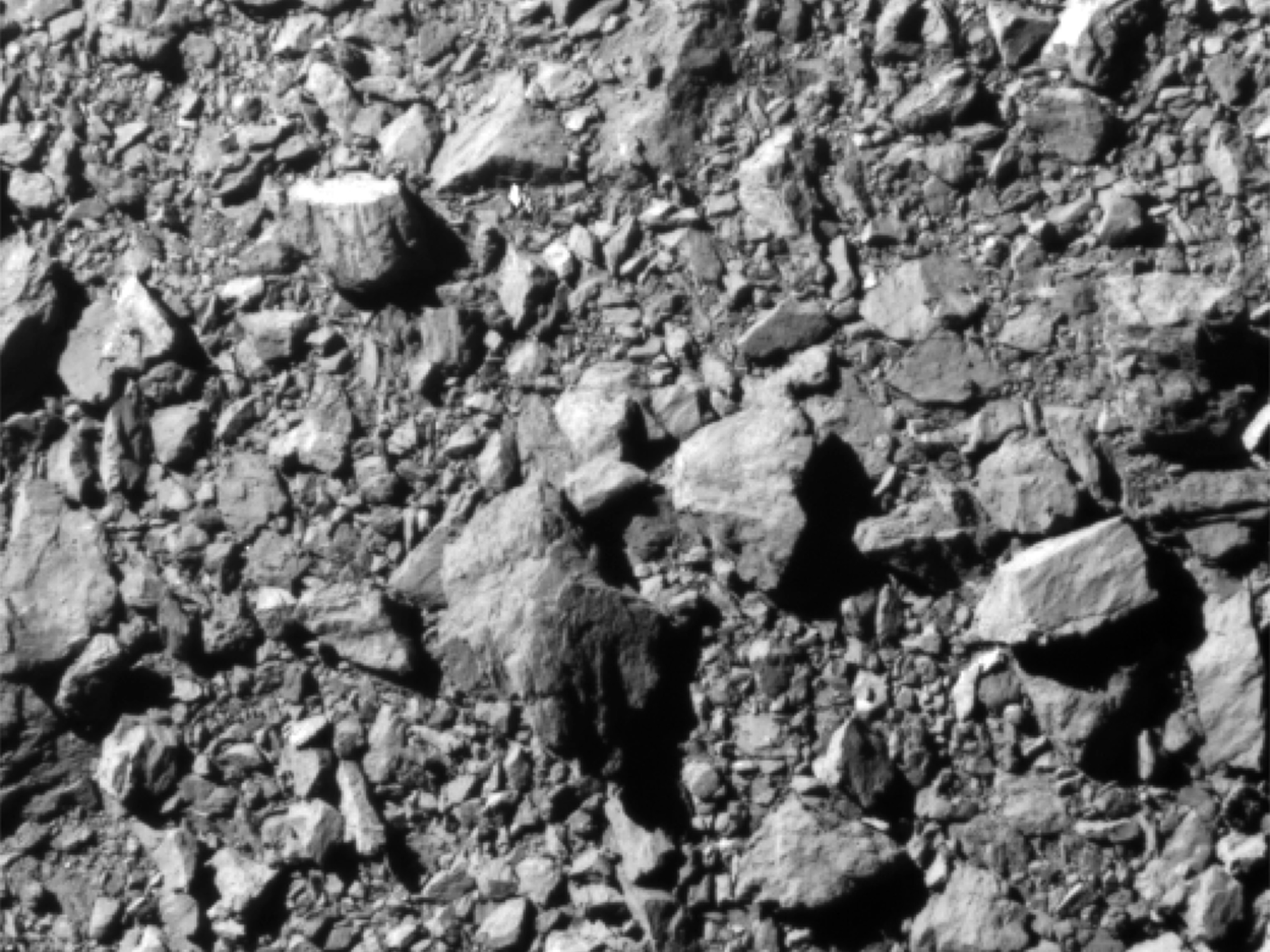
Meanwhile, NASA is working on a plan to deflect killer asteroids. In 2022, the agency slammed a spacecraft into a 500-foot-wide asteroid. The test was a success, significantly knocking the asteroid off its trajectory and breaking off some of its rocky surface into a dusty debris tail. Although the technique would only work in specific situations, it’s reassuring to know that we might not go the way of the dinosaurs after all.
Related Topics
You May Also Like




Go Further
Animals
- How can we protect grizzlies from their biggest threat—trains?How can we protect grizzlies from their biggest threat—trains?
- This ‘saber-toothed’ salmon wasn’t quite what we thoughtThis ‘saber-toothed’ salmon wasn’t quite what we thought
- Why this rhino-zebra friendship makes perfect senseWhy this rhino-zebra friendship makes perfect sense
- When did bioluminescence evolve? It’s older than we thought.When did bioluminescence evolve? It’s older than we thought.
- Soy, skim … spider. Are any of these technically milk?Soy, skim … spider. Are any of these technically milk?
Environment
- Are the Great Lakes the key to solving America’s emissions conundrum?Are the Great Lakes the key to solving America’s emissions conundrum?
- The world’s historic sites face climate change. Can Petra lead the way?The world’s historic sites face climate change. Can Petra lead the way?
- This pristine piece of the Amazon shows nature’s resilienceThis pristine piece of the Amazon shows nature’s resilience
- Listen to 30 years of climate change transformed into haunting musicListen to 30 years of climate change transformed into haunting music
History & Culture
- Meet the original members of the tortured poets departmentMeet the original members of the tortured poets department
- Séances at the White House? Why these first ladies turned to the occultSéances at the White House? Why these first ladies turned to the occult
- Gambling is everywhere now. When is that a problem?Gambling is everywhere now. When is that a problem?
- Beauty is pain—at least it was in 17th-century SpainBeauty is pain—at least it was in 17th-century Spain
Science
- Here's how astronomers found one of the rarest phenomenons in spaceHere's how astronomers found one of the rarest phenomenons in space
- Not an extrovert or introvert? There’s a word for that.Not an extrovert or introvert? There’s a word for that.
- NASA has a plan to clean up space junk—but is going green enough?NASA has a plan to clean up space junk—but is going green enough?
- Soy, skim … spider. Are any of these technically milk?Soy, skim … spider. Are any of these technically milk?
Travel
- This tomb diver was among the first to swim beneath a pyraamidThis tomb diver was among the first to swim beneath a pyraamid
- Dina Macki on Omani cuisine and Zanzibari flavoursDina Macki on Omani cuisine and Zanzibari flavours
- How to see Mexico's Baja California beyond the beachesHow to see Mexico's Baja California beyond the beaches
- Could Mexico's Chepe Express be the ultimate slow rail adventure?Could Mexico's Chepe Express be the ultimate slow rail adventure?
