



Plague was one of history’s deadliest diseases—then we found a cure
Known as the Black Death, the much feared disease spread quickly for centuries, killing millions. The bacterial infection still occurs but can be treated with antibiotics.
Plague is one of the deadliest diseases in human history, second only to smallpox. A bacterial infection found mainly in rodents and associated fleas, plague readily leaps to humans in close contact. Plague outbreaks are the most notorious epidemics in history, inciting fears of plague’s use as a biological weapon.
Today, plague cases still pop up sporadically around the world—including in the United States or China, where a suspected case was recently reported in the Inner Mongolia region. But the disease is no longer as deadly as it can be treated with antibiotics when available.
Here’s what you need to know about the plague, including how it spreads, the difference between bubonic and pneumonic plague, the most infamous plague pandemics in history, and why it’s not all that unusual to see modern cases of the disease.
Stages of plague
For hundreds of years, what caused plague outbreaks remained mysterious, and shrouded in superstitions. But keen observations and advances in microscopes eventually helped unveil the true culprit. In 1894, Alexandre Yersin discovered the bacterium responsible for causing plague: Yersinia pestis.
Y. pestis is an extraordinarily virulent, rod-shaped bacterium. Y. pestis disables the immune system of its host by injecting toxins into defense cells, such as macrophages, that are tasked with detecting bacterial infections. Once these cells are knocked out, the bacteria can multiply unhindered.
Many small mammals act as hosts to the bacteria, including rats, mice, chipmunks, prairie dogs, rabbits, and squirrels. During an enzootic cycle, Y. pestis can circulate at low rates within populations of rodents, mostly undetected because it doesn’t produce an outbreak. When the bacteria pass to other species, during an epizootic cycle, humans face a greater risk for becoming infected with plague bacteria.
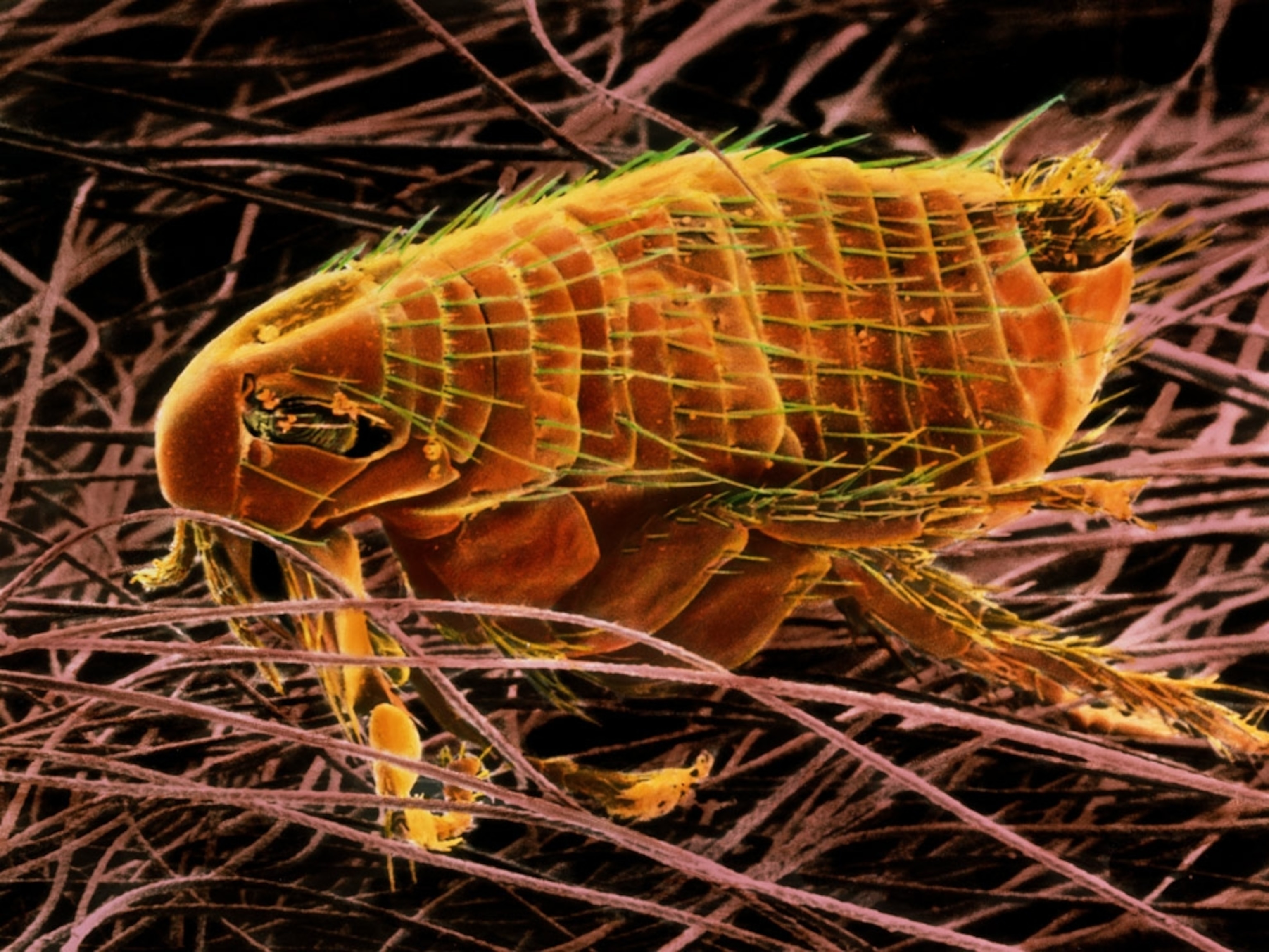
Rats have long been thought to be the main vector of plague outbreaks, because of their intimate connection with humans in urban areas. Scientists have more recently discovered that a flea that lives on rats, Xenopsylla cheopis, primarily causes human cases of plague. When rodents die from the plague, fleas jump to a new host, biting them and transmitting Y. pestis. Transmission also occurs by handling tissue or blood from a plague-infected animal, or inhalation of infected droplets.
Bubonic plague, the disease's most common form, refers to telltale buboes—painfully swollen lymph nodes—that appear around the groin, armpit, or neck. The skin sores become black, leading to its nickname during pandemics as “Black Death.” Initial symptoms of this early stage include vomiting, nausea, and fever.
Pneumonic plague, the most infectious type, is an advanced stage of plague that moves into the lungs. During this stage, the disease is passed directly, person to person, through airborne particles coughed from an infected person’s lungs.
If untreated, bubonic and pneumonic plague can progress to septicemic plague, infecting the bloodstream. If left untreated, pneumonic and septicemic plague kills almost 100 percent of those it infects.
Infamous plagues
Three particularly well-known pandemics occurred before the cause of plague was discovered. The first well-documented crisis was the Plague of Justinian, which began in 542 A.D. Named after the Byzantine emperor Justinian I, the pandemic killed up to 10,000 people a day in Constantinople (modern-day Istanbul, Turkey), according to ancient historians. Modern estimates indicate half of Europe's population—almost 100 million deaths—was wiped out before the plague subsided in the 700s.


Arguably the most infamous plague outbreak was the so-called Black Death, a multi-century pandemic that swept through Asia and Europe. It was believed to start in China in 1334, spreading along trade routes and reaching Europe via Sicilian ports in the late 1340s. The plague killed an estimated 25 million people, almost a third of the continent’s population. The Black Death lingered on for centuries, particularly in cities. Outbreaks included the Great Plague of London (1665-66), in which 70,000 residents died.
The cause of plague wasn't discovered until the most recent global outbreak, which started in China in 1860 and didn't officially end until 1959. The pandemic caused roughly 10 million deaths. The plague was brought to North America in the early 1900s by ships, and thereafter spread to small mammals throughout the United States.
The high rate of fatality during these pandemics meant that the dead were often buried in quickly dug mass graves. From teeth of these plague victims, scientists have pieced together a family tree of Y. pestis, discovering that the strain from the Justinian Plague was related to, but distinct from, other strains of the plague. (Read how modern plague strains descended from a strain that arose during the Black Death pandemic.)
Plague in modern society
Plague still exists in various parts of the world, popping up sporadically and followed actively by the World Health Organization and Centers for Disease Control and Prevention. Most cases have appeared in Africa since the 1990s.
Between 2004 to 2014, the Democratic Republic of the Congo reported the majority of plague cases worldwide, with 4,630 human cases and 349 deaths. Scientists link the prevalence of plague in the Democratic Republic of Congo to the ecosystem—primarily mountain tropical climate. More recently, plague broke out in Madagascar in 2017, causing more than 2,300 cases.
The United States, China, India, Vietnam, and Mongolia are among the other countries that have had confirmed human plague cases in recent years. Within the U.S., on average seven human cases of plague appear each year, emerging primarily in California and the Southwest.
Today, most people survive plague with rapid diagnosis and antibiotic treatment. Good sanitation practices and pest control minimize contact with infected fleas and rodents to help prevent plague pandemics.
Plague is classified as a Category A pathogen, because it readily passes between people and could result in high mortality rates if untreated. This classification has helped stoke fears that Y. pestis could be used as a biological weapon if distributed in aerosol form. As a small airborne particle it would cause pneumonic plague, the most lethal and contagious form.
Of conservation concern, federally endangered black-footed ferrets contract another form of the plague, sylvatic plague, from nearby prairie dogs. Plague can decimate prairie dog populations, which are a critical food source for black-footed ferrets. Scientists have started to administer a vaccine to prevent plague outbreaks in prairie dogs and black-footed ferrets.
Centers for Disease Control and Prevention: Plague
History.com: Black Death
Johns Hopkins: Center for Health Security
National Institute of Allergy and Infectious Diseases: Priority Pathogens
Plague as a Biological Weapon
Plague: from natural disease to bioterrorism
U.S. Fish & Wildlife Service: Black-footed ferret
World Health Organization: Plague
Related Topics
You May Also Like


Go Further
Animals
- How can we protect grizzlies from their biggest threat—trains?How can we protect grizzlies from their biggest threat—trains?
- This ‘saber-toothed’ salmon wasn’t quite what we thoughtThis ‘saber-toothed’ salmon wasn’t quite what we thought
- Why this rhino-zebra friendship makes perfect senseWhy this rhino-zebra friendship makes perfect sense
- When did bioluminescence evolve? It’s older than we thought.When did bioluminescence evolve? It’s older than we thought.
- Soy, skim … spider. Are any of these technically milk?Soy, skim … spider. Are any of these technically milk?
Environment
- Are the Great Lakes the key to solving America’s emissions conundrum?Are the Great Lakes the key to solving America’s emissions conundrum?
- The world’s historic sites face climate change. Can Petra lead the way?The world’s historic sites face climate change. Can Petra lead the way?
- This pristine piece of the Amazon shows nature’s resilienceThis pristine piece of the Amazon shows nature’s resilience
- Listen to 30 years of climate change transformed into haunting musicListen to 30 years of climate change transformed into haunting music
History & Culture
- Meet the original members of the tortured poets departmentMeet the original members of the tortured poets department
- Séances at the White House? Why these first ladies turned to the occultSéances at the White House? Why these first ladies turned to the occult
- Gambling is everywhere now. When is that a problem?Gambling is everywhere now. When is that a problem?
- Beauty is pain—at least it was in 17th-century SpainBeauty is pain—at least it was in 17th-century Spain
Science
- Here's how astronomers found one of the rarest phenomenons in spaceHere's how astronomers found one of the rarest phenomenons in space
- Not an extrovert or introvert? There’s a word for that.Not an extrovert or introvert? There’s a word for that.
- NASA has a plan to clean up space junk—but is going green enough?NASA has a plan to clean up space junk—but is going green enough?
- Soy, skim … spider. Are any of these technically milk?Soy, skim … spider. Are any of these technically milk?
Travel
- Could Mexico's Chepe Express be the ultimate slow rail adventure?Could Mexico's Chepe Express be the ultimate slow rail adventure?
- What it's like to hike the Camino del Mayab in MexicoWhat it's like to hike the Camino del Mayab in Mexico
