

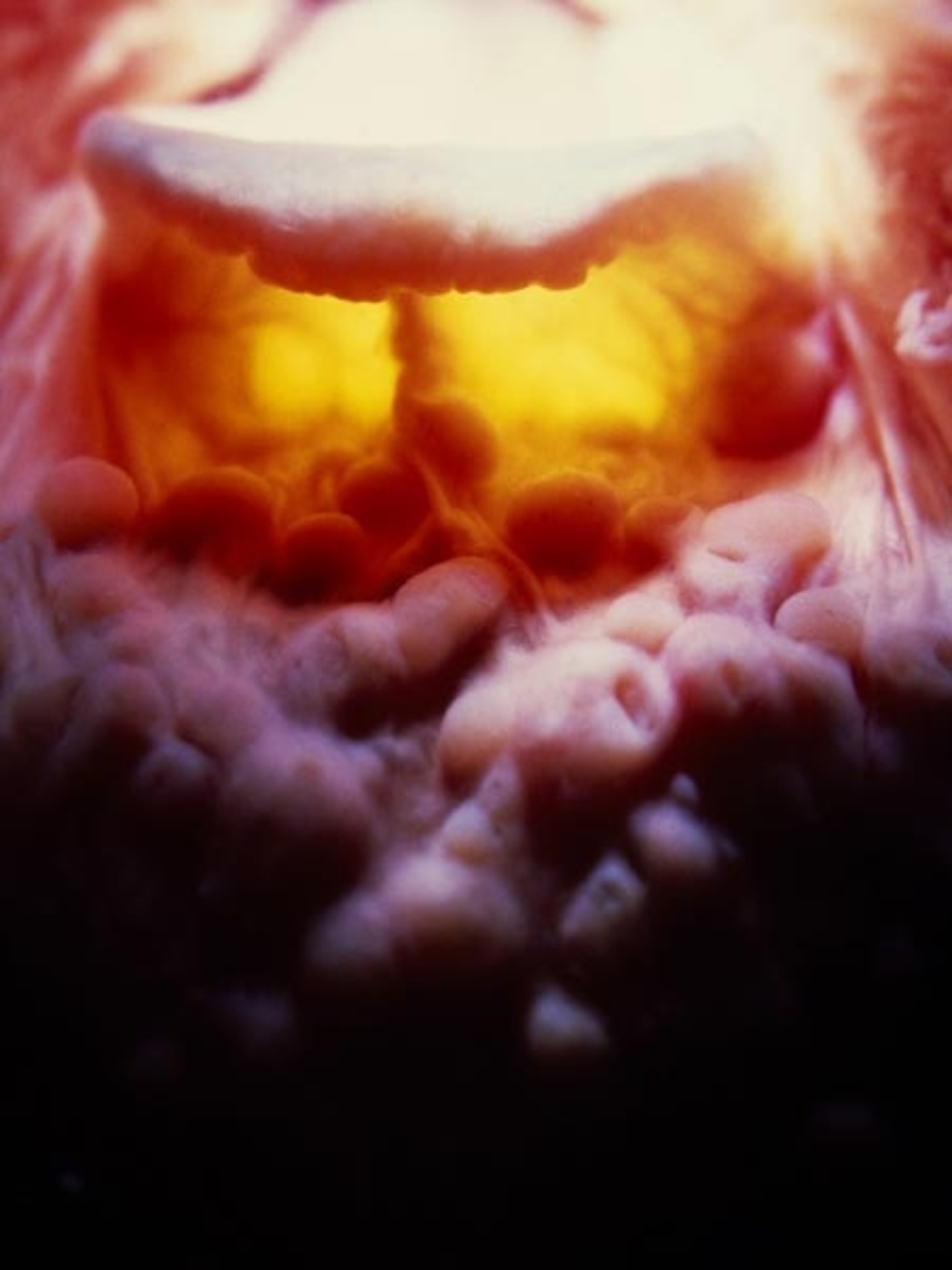
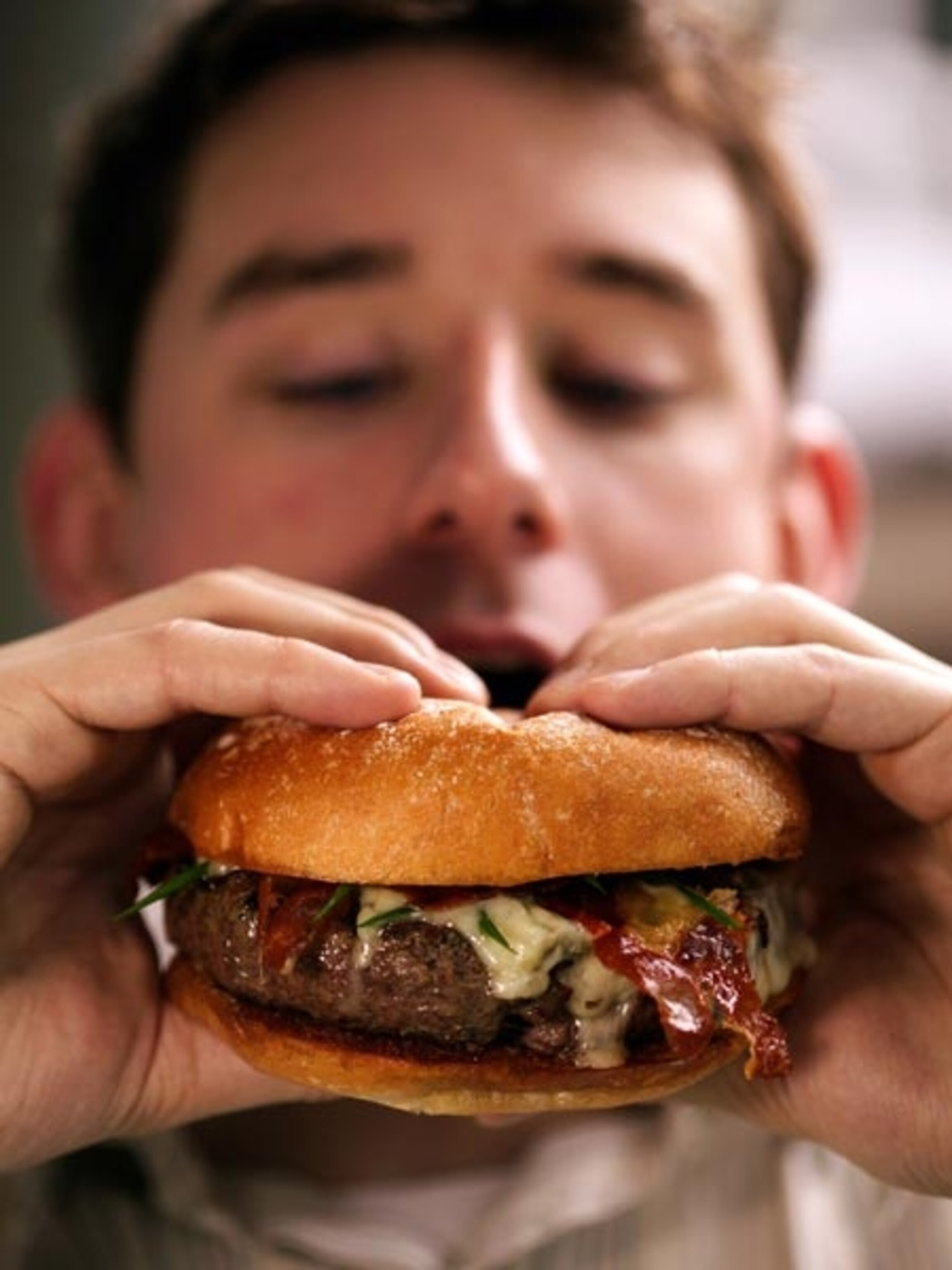


The digestive system is the series of tubelike organs that convert our meals into body fuel. There are about 30 feet (9 meters) of these convoluted pipeworks, starting with the mouth and ending with the anus. Along the way, food is broken down, sorted, and reprocessed before being circulated around the body to nourish and replace cells and supply energy to our muscles.
Changing Food to Fuel
Food on the plate must be converted into a mashed-up, gooey liquid for the digestive system to be able to split it up into its constituent parts: proteins, carbohydrates, fats, vitamins, and minerals. Our teeth start the process by chewing and grinding up each mouthful, while the tongue works it into a ball-shaped bolus for swallowing.
Moistening saliva fed into the mouth from nearby glands starts the process of chemical digestion using specialized proteins called enzymes. Secreted at various points along the digestive tract, enzymes break down large molecules of food into smaller molecules that the body is able to absorb.
Once we swallow, digestion becomes involuntary. Food passes down the throat to the esophagus, the first of a succession of hollow organs that transport their contents through muscular contractions known as peristalsis.
The esophagus empties into the stomach, a large, muscular chamber that mixes food up with digestive juices including the enzyme pepsin, which targets proteins, and lipase, which works on fats. Hydrochloric acid likewise helps to dissolve the stomach contents while killing potentially harmful bacteria. The resulting semifluid paste—chyme—is sealed in the stomach by two ringlike sphincter muscles for several hours and then released in short bursts into the duodenum.
The first of three sections of the small intestine, the duodenum, produces large quantities of mucus to protect the intestinal lining from acid in the chyme.
Measuring about 20 feet (6 meters) in length, the small intestine is where the major digestion and absorption of nutrients take place. These nutrients are taken into the bloodstream, via millions of tiny, fingerlike projections called villi, and transported to the liver.
What's left in the digestive tract passes into the large intestine, where it's eaten by billions of harmless bacteria and mixed with dead cells to form solid feces. Water is reabsorbed into the body while the feces are moved into the rectum to await expulsion.
Other Key Players
Other organs that play a key role in digestion include the liver, gallbladder, and pancreas. The pancreas is a gland organ located behind the stomach that manufactures a cocktail of enzymes that are pumped into the duodenum. A duct also connects the duodenum to the gallbladder. This pear-shaped sac squeezes out green-brown bile, a waste product collected from the liver that contains acids for dissolving fatty matter.
The liver itself is the body's main chemical factory, performing hundreds of different functions. It processes nutrients absorbed into the blood by the small intestine, creating energy-giving glycogen from sugary carbohydrates and converting dietary proteins into new proteins needed for our blood. These are then stored or released as needed, as are essential vitamins and minerals. The liver also breaks down unwanted chemicals, such as any alcohol consumed, which is detoxified and passed from the body as waste.
Related Topics
You May Also Like


Go Further
Animals
- How can we protect grizzlies from their biggest threat—trains?How can we protect grizzlies from their biggest threat—trains?
- This ‘saber-toothed’ salmon wasn’t quite what we thoughtThis ‘saber-toothed’ salmon wasn’t quite what we thought
- Why this rhino-zebra friendship makes perfect senseWhy this rhino-zebra friendship makes perfect sense
- When did bioluminescence evolve? It’s older than we thought.When did bioluminescence evolve? It’s older than we thought.
- Soy, skim … spider. Are any of these technically milk?Soy, skim … spider. Are any of these technically milk?
Environment
- Are the Great Lakes the key to solving America’s emissions conundrum?Are the Great Lakes the key to solving America’s emissions conundrum?
- The world’s historic sites face climate change. Can Petra lead the way?The world’s historic sites face climate change. Can Petra lead the way?
- This pristine piece of the Amazon shows nature’s resilienceThis pristine piece of the Amazon shows nature’s resilience
- Listen to 30 years of climate change transformed into haunting musicListen to 30 years of climate change transformed into haunting music
History & Culture
- Meet the original members of the tortured poets departmentMeet the original members of the tortured poets department
- Séances at the White House? Why these first ladies turned to the occultSéances at the White House? Why these first ladies turned to the occult
- Gambling is everywhere now. When is that a problem?Gambling is everywhere now. When is that a problem?
- Beauty is pain—at least it was in 17th-century SpainBeauty is pain—at least it was in 17th-century Spain
Science
- Here's how astronomers found one of the rarest phenomenons in spaceHere's how astronomers found one of the rarest phenomenons in space
- Not an extrovert or introvert? There’s a word for that.Not an extrovert or introvert? There’s a word for that.
- NASA has a plan to clean up space junk—but is going green enough?NASA has a plan to clean up space junk—but is going green enough?
- Soy, skim … spider. Are any of these technically milk?Soy, skim … spider. Are any of these technically milk?
Travel
- Could Mexico's Chepe Express be the ultimate slow rail adventure?Could Mexico's Chepe Express be the ultimate slow rail adventure?
- What it's like to hike the Camino del Mayab in MexicoWhat it's like to hike the Camino del Mayab in Mexico
