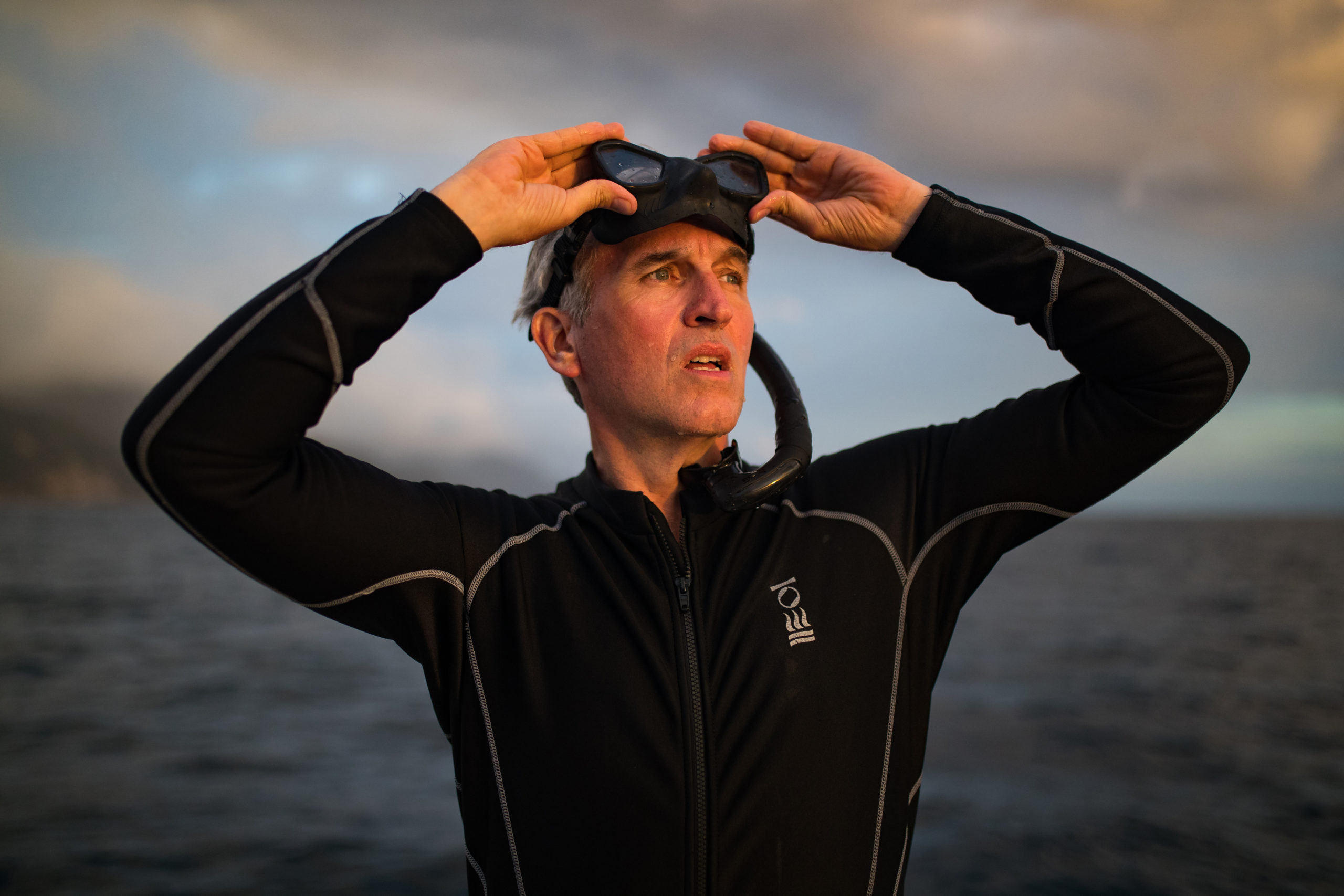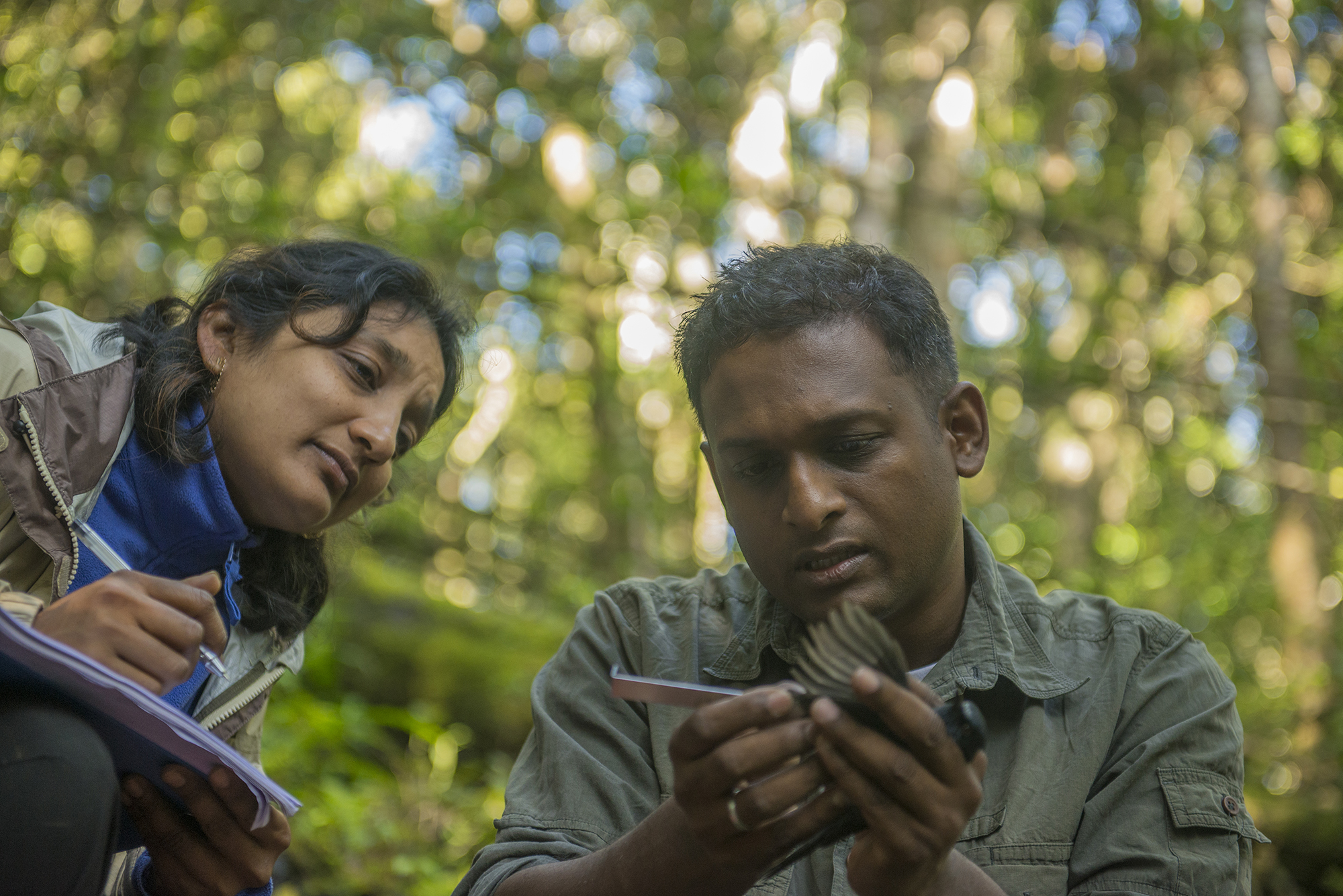
NGS/Waitt grantee Eamon Keogh collecting data at the Pu'u Loa petroglyph site close to the Kilauea volcano in Hawaii.
Image courtesy of Eamonn Keogh
About the Project
NGS/Waitt grantee Eamonn J. Keogh and his team are attempting to digitally archive images of rock art, or petroglyphs, found in the Southwest United States and making these available to the public.
An abstract (top) and animal petroglyph (bottom) which has been traced and issued as queries to the database that NGS/Waitt grantee Eamon Keogh and his team are building. The list of the five nearest matches to each are shown left to right.
Image courtesy of Eamonn Keogh
Petroglyphs are images created by removing part of a rock surface by incising, pecking, carving, and abrading. Petroglyphs are one of the earliest expressions of abstract thinking and are considered a hallmark of humanity. Beyond their value as an aesthetic expression, petroglyphs provide a rich body of information on several different dimensions. Motifs can, at least in theory, be identified and traced through time and space, which in turn may shed light on the dynamic histories of human populations, the patterns of their migrations and interactions, and even continuities with present indigenous societies.
Studies of rock art have implications beyond anthropology and history. For example, a recent study postulates the existence of a now-extinct Australian bat species based on extraordinarily detailed pictographs known to be at least 17,500 years old. Petroglyphs have been used in studies of climate change, and the changing inventories of species in the Dampier Archipelago from the Pleistocene to the early Holocene periods have been reconstructed partly using petroglyph evidence. However, in spite of these successes, progress in petroglyph research has been frustratingly slow.
Clustering of Southwestern USA rock art
Image courtesy of Eamonn Keogh
This could be because the extraordinarily diverse and complex structure of rock art images defies most existing image matching algorithms. Most approaches are simply not suitable for capturing the similarity of petroglyphs, and those that are, even in limited cases. In this work the team will introduce a novel distance measure for rock art, showing that it can correctly capture the subjective (and where available, objective) similarity between petroglyphs. They hope to show how they can use this distance measure as a basis for several higher-level “data-mining” algorithms (e.g., finding repeated motifs, clustering, or simply enabling query-by-content).
In this work Keogh and his team will identify the reasons for this, and introduce a novel distance measure and algorithms, both of which allow efficient and effective data mining of large collections of rock art.
Related Features
-
NGS/Waitt Grants Home
The National Geographic Society/Waitt Grants Program supports exceptional projects by funding "proof of concept" research for applicants at an early stage in their careers.
-
Apply for a Waitt Grant
Looking to push the boundaries of science and technology?
-
See Complete List of Grantees
The NGS/Waitt Grant Program has funded over 100 projects in its first year.
-
Application Frequently Asked Questions
Find the answers to your grant application questions.
Shop National Geographic
2012 Emerging Explorers
ScienceBlogs Picks
-
Jane Goodall
Over the course of 50 years Jane has witnessed the lives of three generations of chimpanzees.
-
Explorer Moment
Ed Viesturs shares an early morning view from Everest.
Advertisement
Archaeology Games
-
Mystery of Cleopatra
Investigate a murder in Cleopatra's palace.
-
Lilly Wu and the Terra Cotta Mystery
Use forensic archaeology to solve the death of China's first emperor.
-
Quiz Your Noodle: Ancient Maya
How much do you know about the ancient Mesoamerican Maya civilization?
Archaeology Photography
-
My Shot Archaeology
Scroll through hundreds of archaeology images. Click on a thumbnail to enlarge.
-
People and Culture Photos
Explore hundreds of photos of different cultures and their people.
National Geographic Magazine
-
Roman Frontiers Pictures
Rome’s border walls were the beginning of its end.
-
Easter Island Pictures
How did the Easter Island statues move? That question puzzles archaeologists—and modern-day islanders.
-
Terra-Cotta Army Pictures
Archaeologists and artists, armed with the latest tools and techniques, are bringing the life-size army of painted clay soldiers back to life.
-
What Is the Great Energy Challenge?
The Great Energy Challenge is a National Geographic initiative to help you understand our current energy situation. Explore the GEC to figure out and trim your carbon footprint.
-
Meter Your Personal Energy
See how you measure up against others, and how changes at home or in travel choices could do tons to protect the atmosphere.